
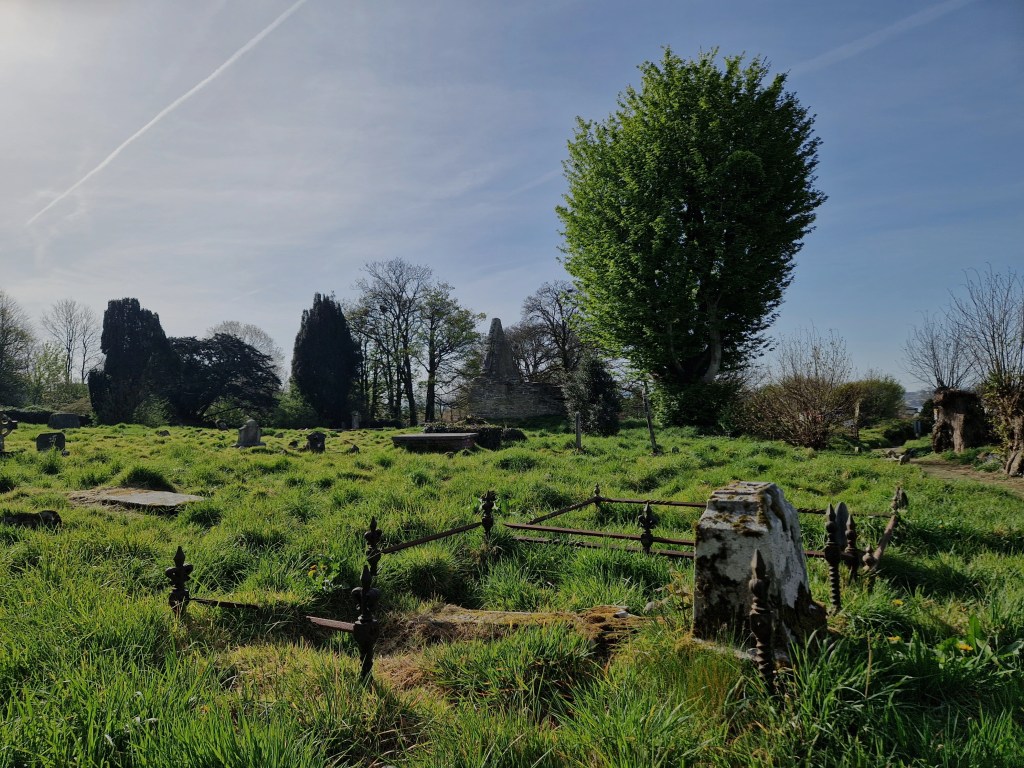







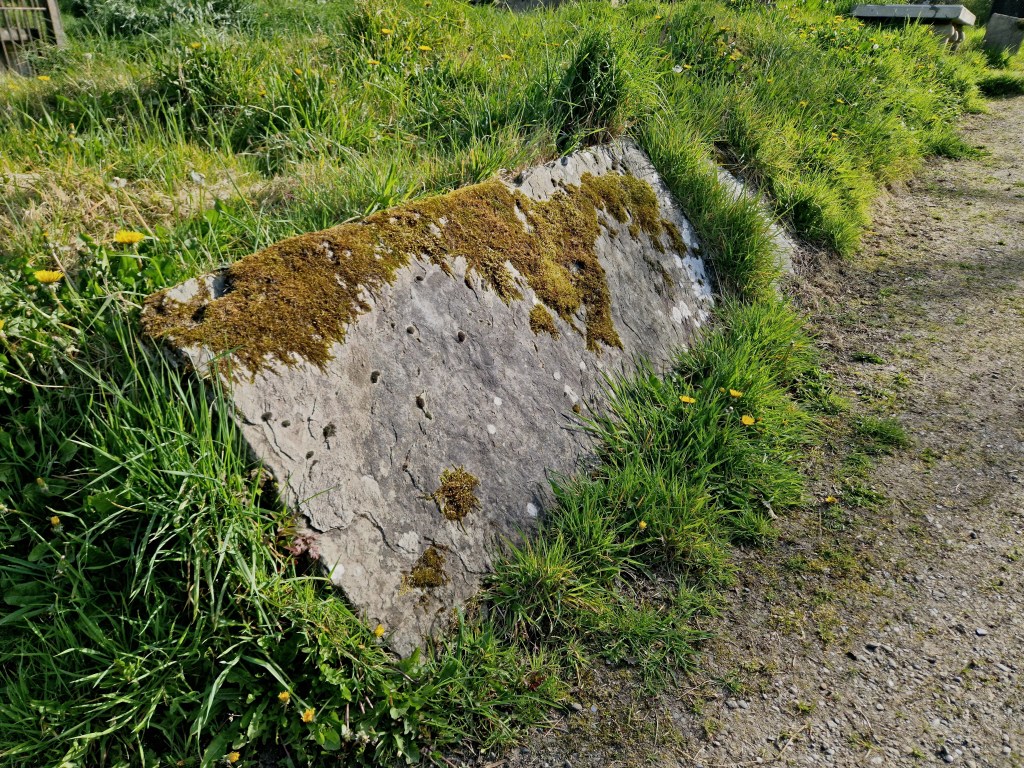


St Mura’s Church and Cross stand in the graveyard of what was once the ancient abbey of Fahan situated just off the main road between Buncrana and Derry. The first monastic settlement at this site dates to around the late 6th or early 7th century. The monastery was originally known as ‘Othan Mór’ but after the death of St Mura circa 645AD the name was changed to Fahan Mura. The main attraction at this ecclesiastical site is the cross slab dating to the 8th century and believed to be a precursor to the High Crosses that came later. The slab is 2 metres in height and 90 centimetres in width and is believed to mark the final resting place of Saint Mura. The cross is incredibly intricate with its west face decorated with an intricate style carving of a cross with stunning ribbonwork with a rounded boss at its centre, either side of the base of the cross are two human figures, its uncertain who they represent. I have also seen these markings on this side of the cross described as having a ‘tree of life’ motif but am uncertain of the surety of this statement. The east side of the cross has another beautifully interlaced cross design with two birds facing each other at the upper end of the slab. The north side of the cross has an inscription in Greek saying, “Glory and honour to the Father, the Son and the Holy Spirit”.
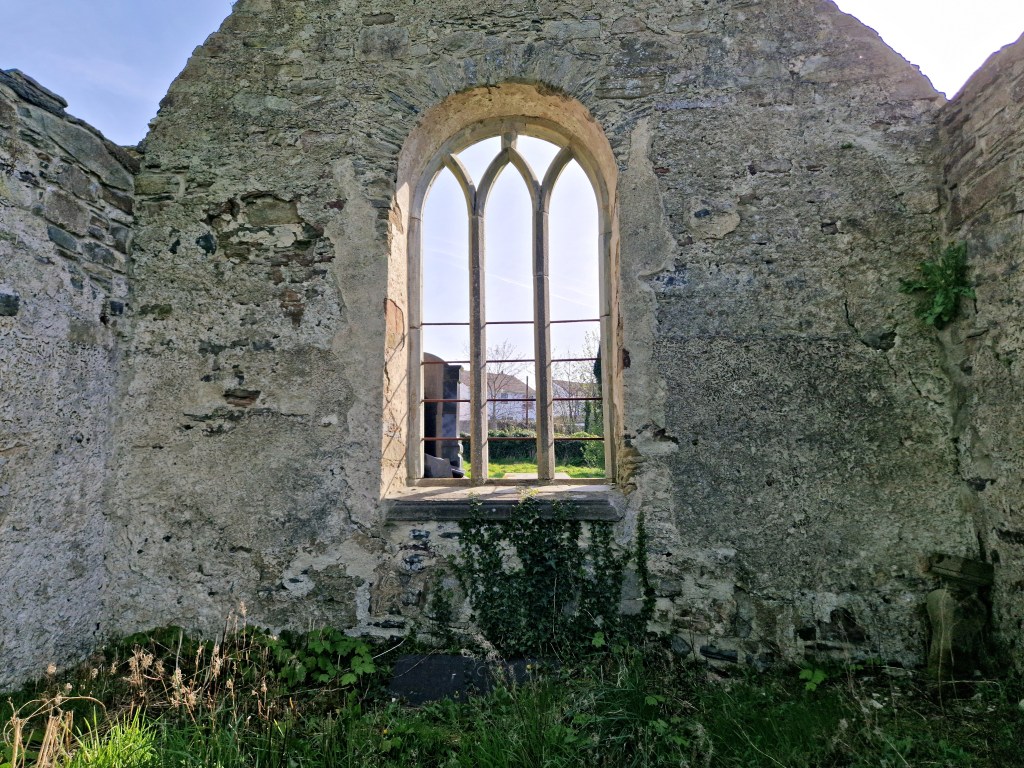
I have read that the church ruin that sits in the centre of the graveyard is described as being of 17th century origin however I do wonder if it predates this by at least 100 years and was later incorporated into a Church of Ireland structure. The Royal Commission in 1622 described the church as ‘well and sufficiently repaired’, which would lead me to believe the structure is older than the 17th century. This church was in use until 1820 when a replacement was built nearby and now only the east gable fully survives alongside the adjoining sections of the north and east walls.
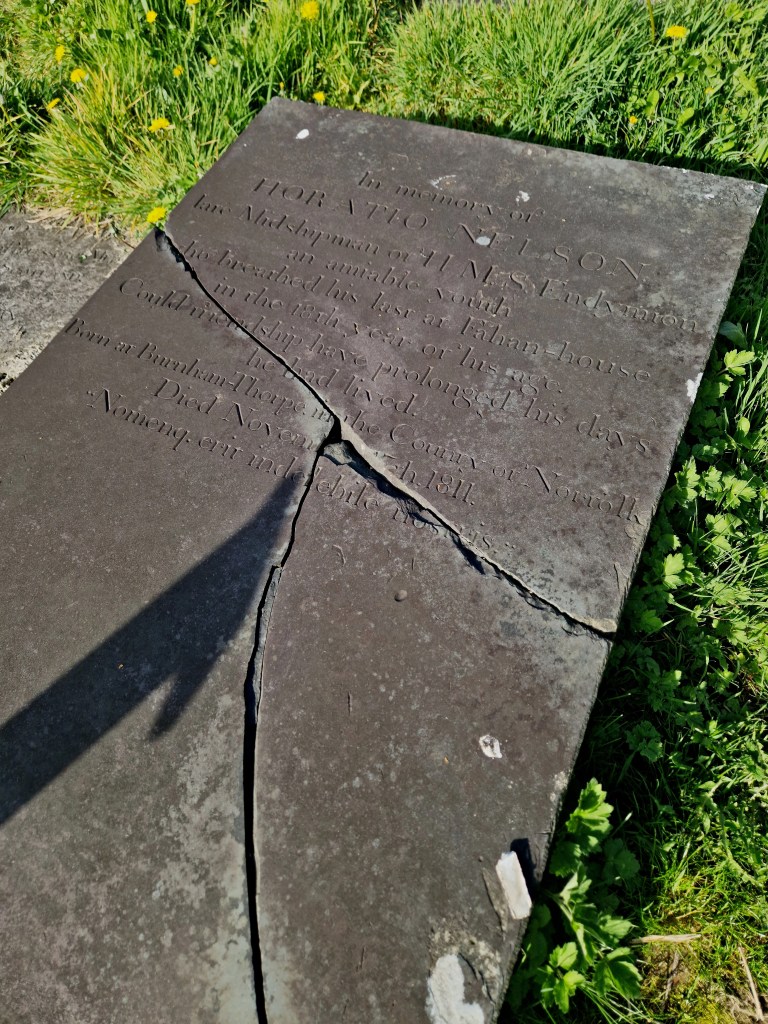
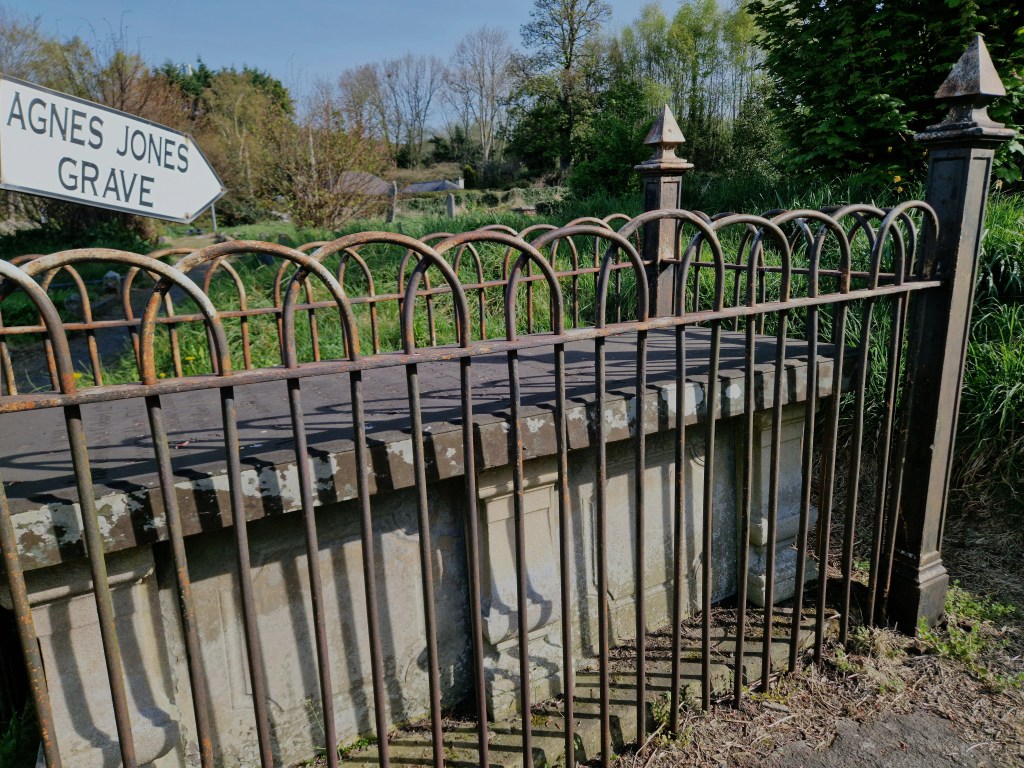
On the outside wall of the graveyard at the southern side of the entrance there is a slab with a small carved wheeled cross. On the other side of the entrance is a stone with a hole bored right through it 15cms in diameter. The graveyard is dotted with headstones with legible dates right back into the early 17th century. Notable graves include that of Agnes Elizabeth Jones (1832-1868) a nurse who was a contemporary of Florence Nightingale and established Ireland’s first nurse training programme. There is also a mass grave for some of the 256 seamen who lost their lives during World War 1 when the SS Laurentic struck a mine and sank in Lough Swilly. Fahan Mura is certainly worth a visit if visiting Derry or Buncrana.
GPS: 55.08329, -7.46082