
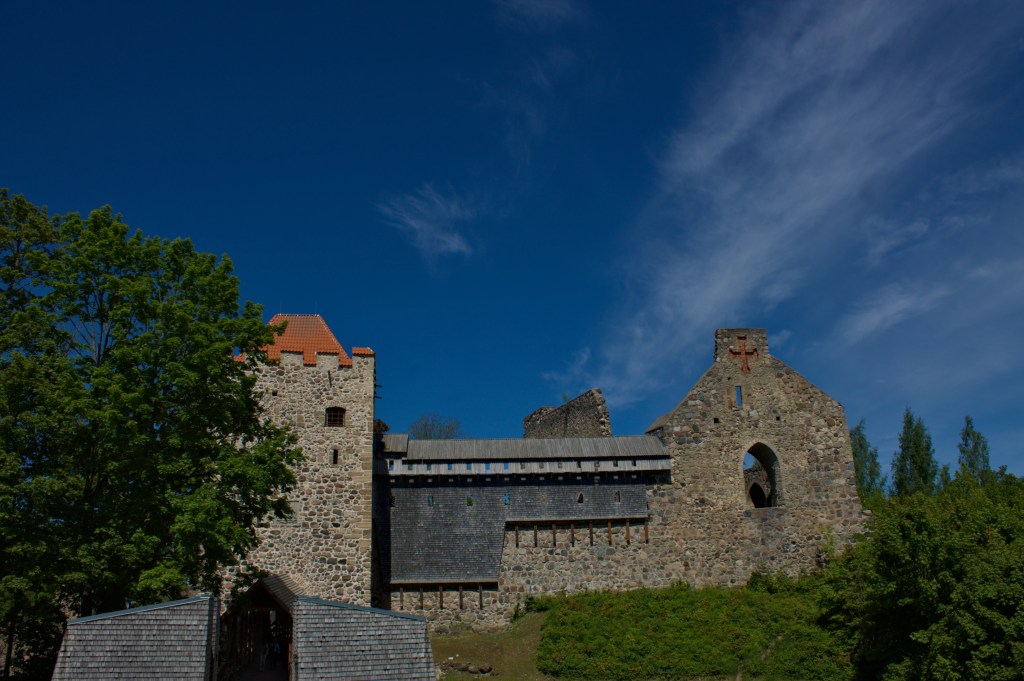

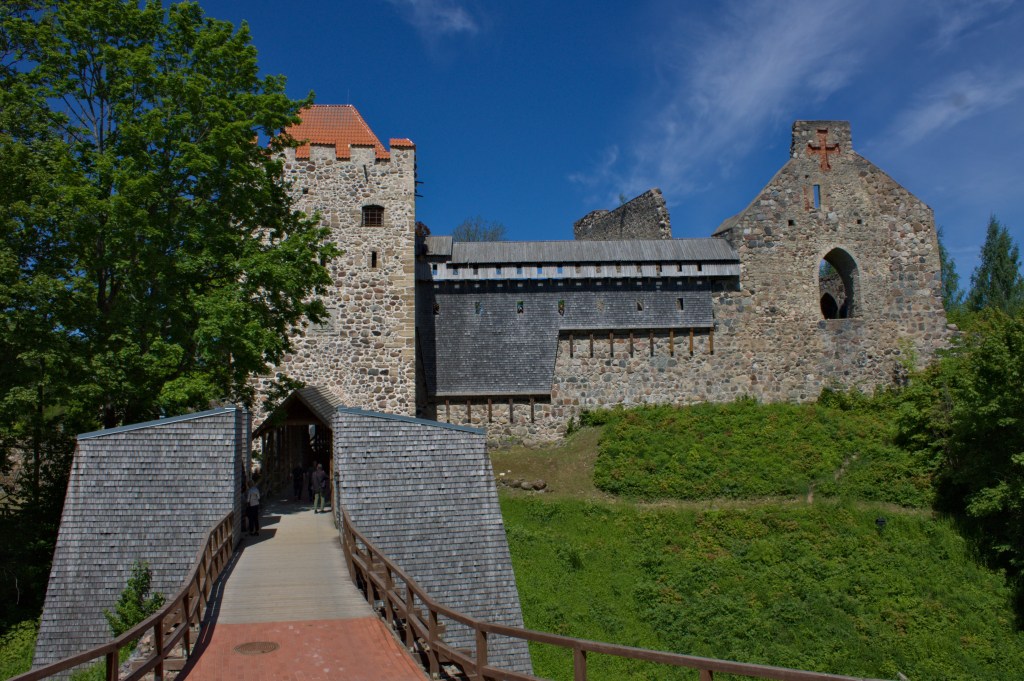
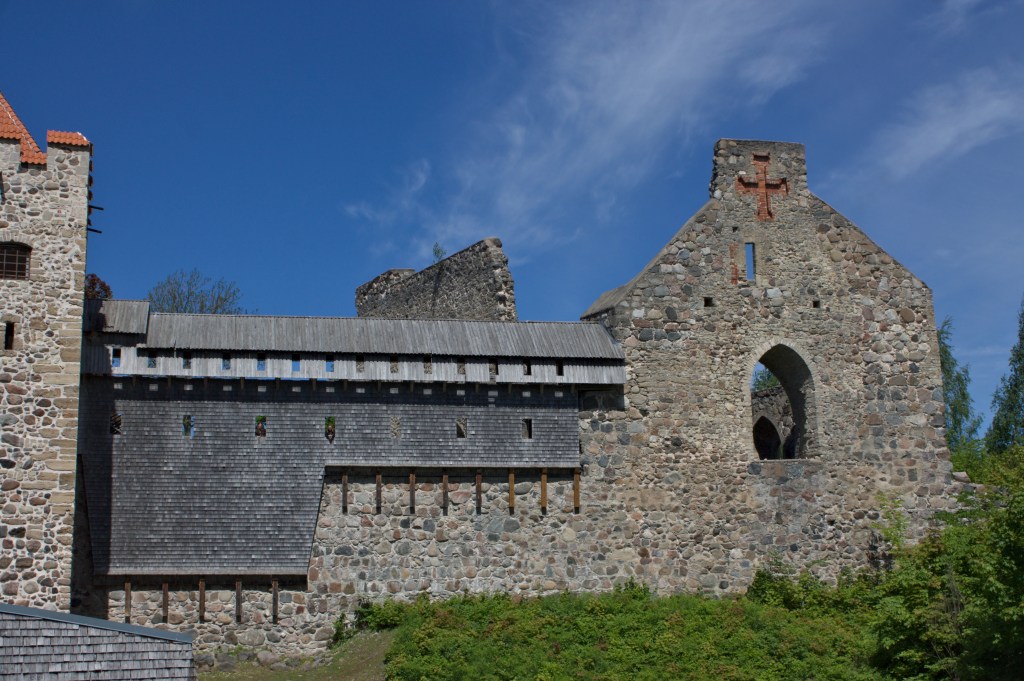
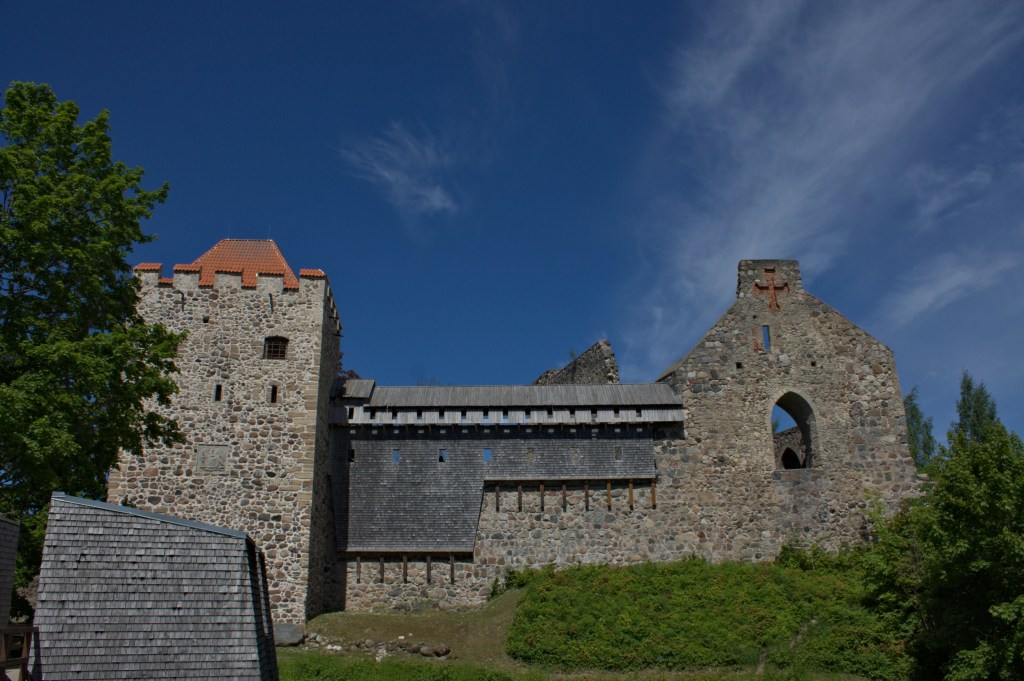
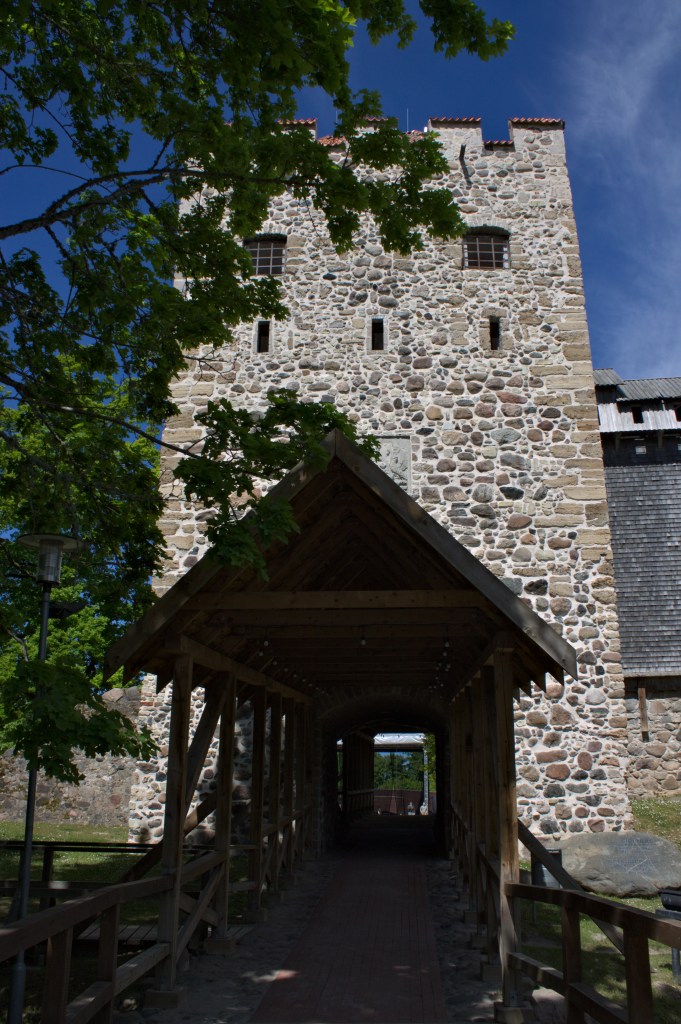
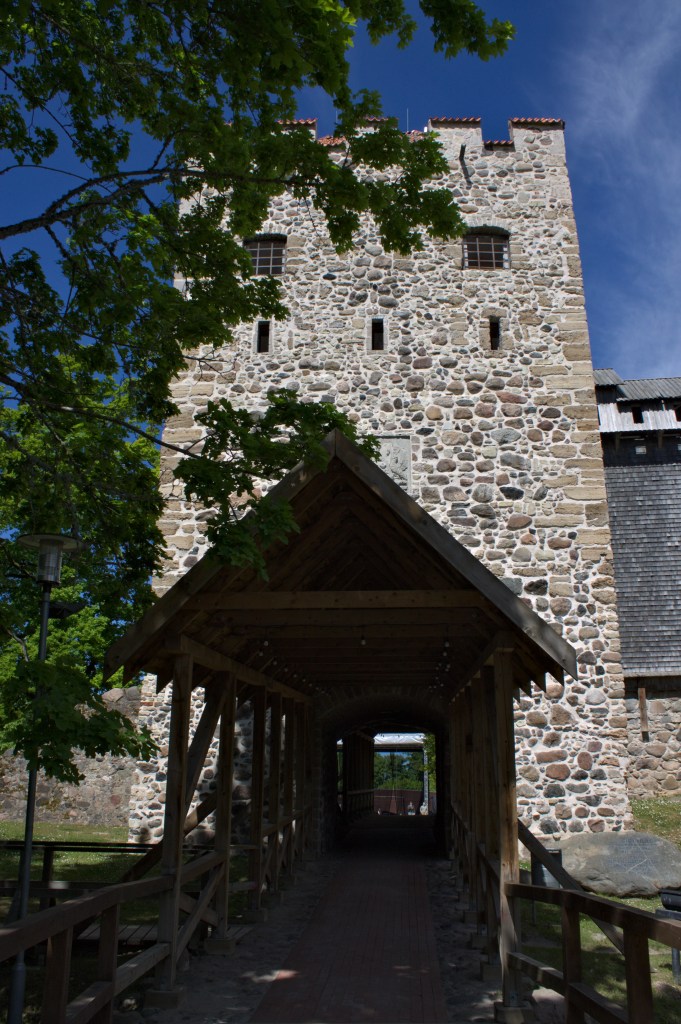

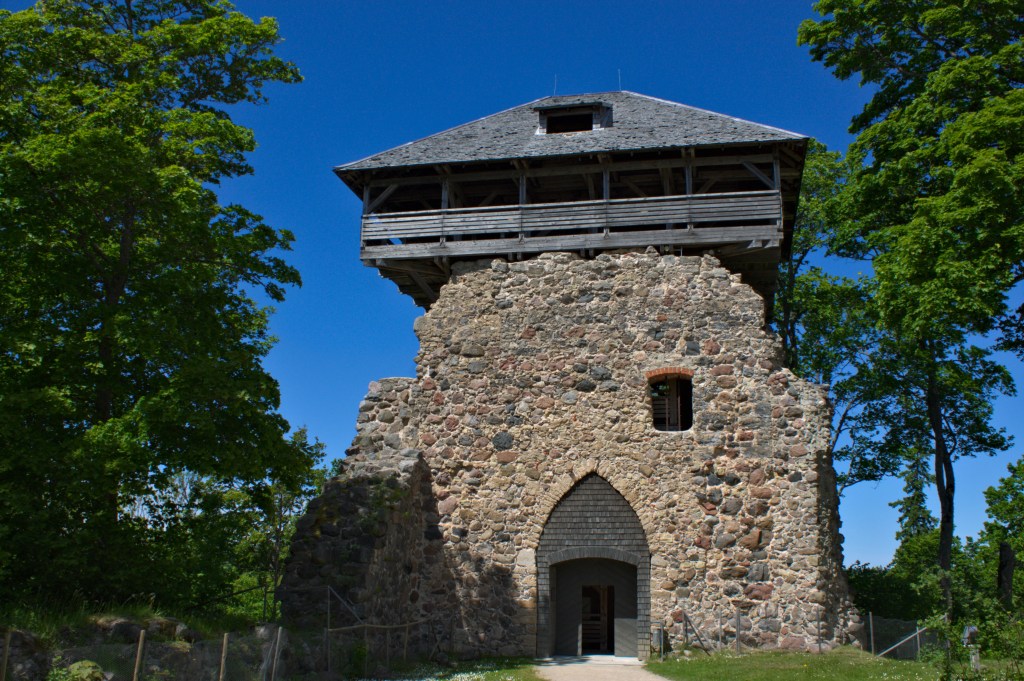
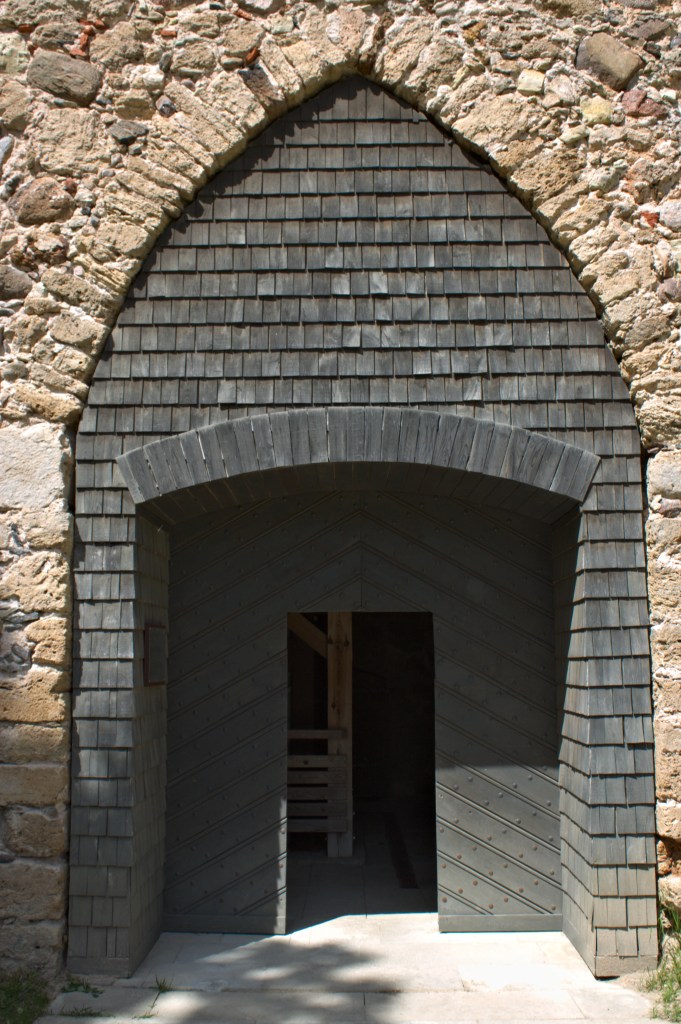
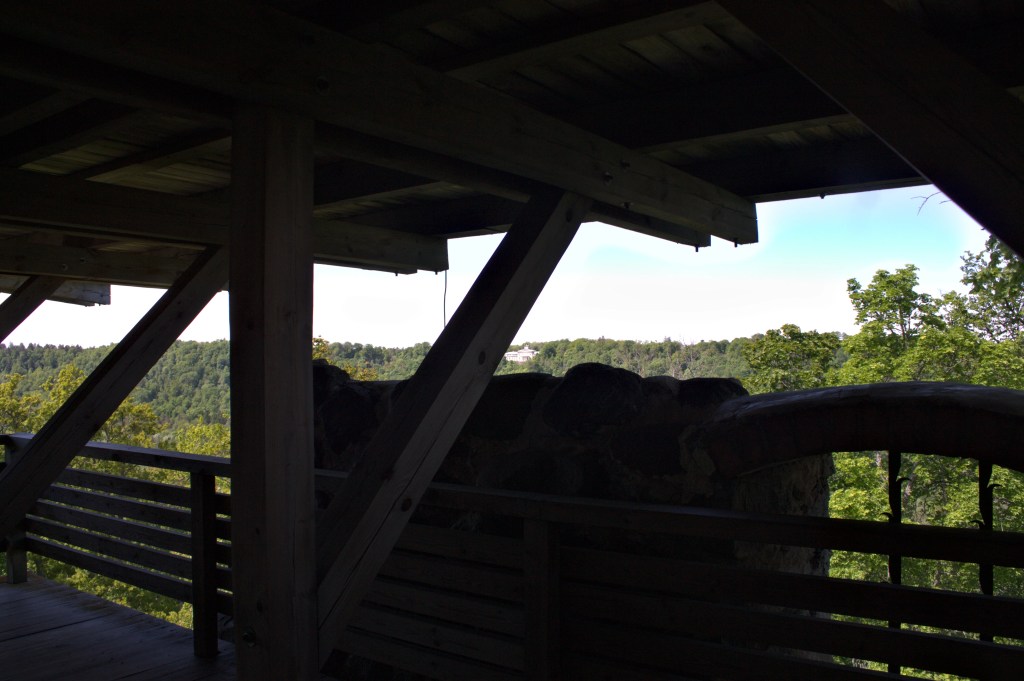
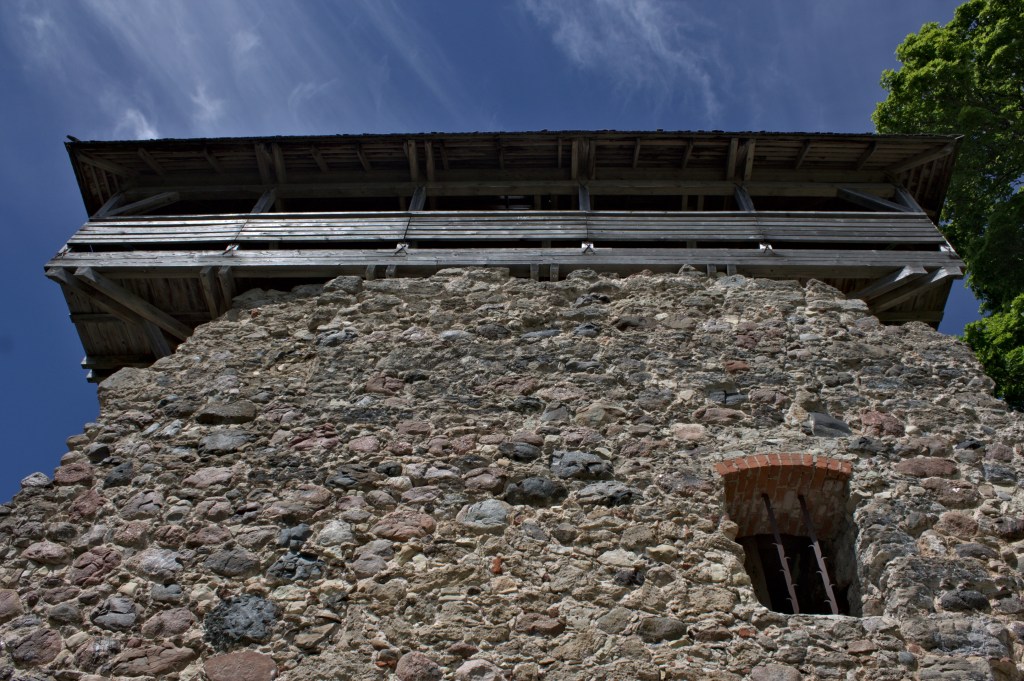
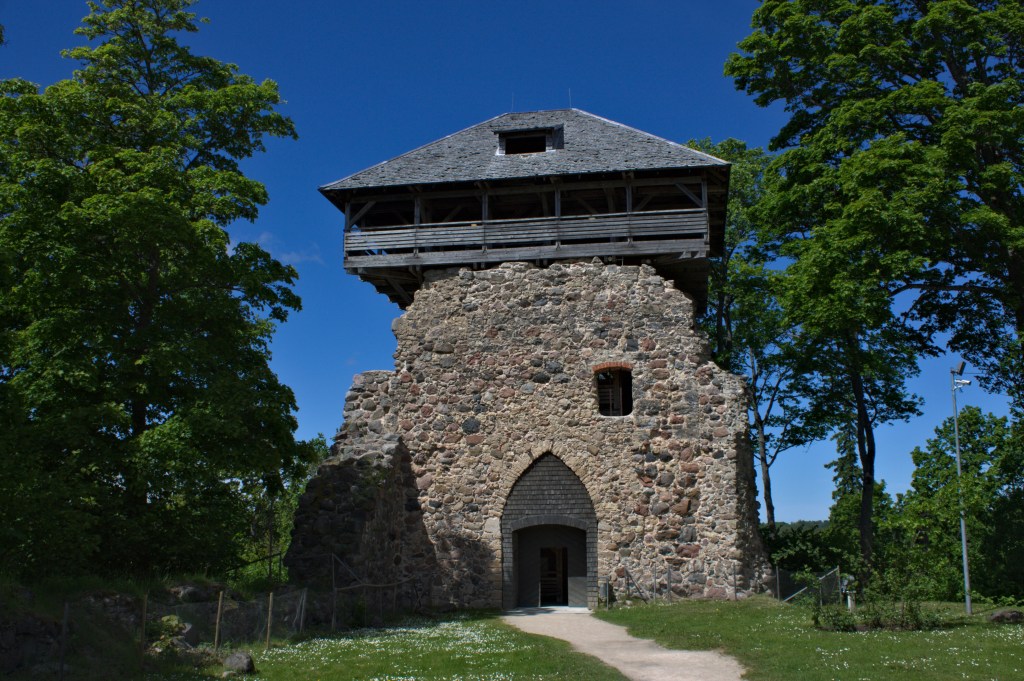
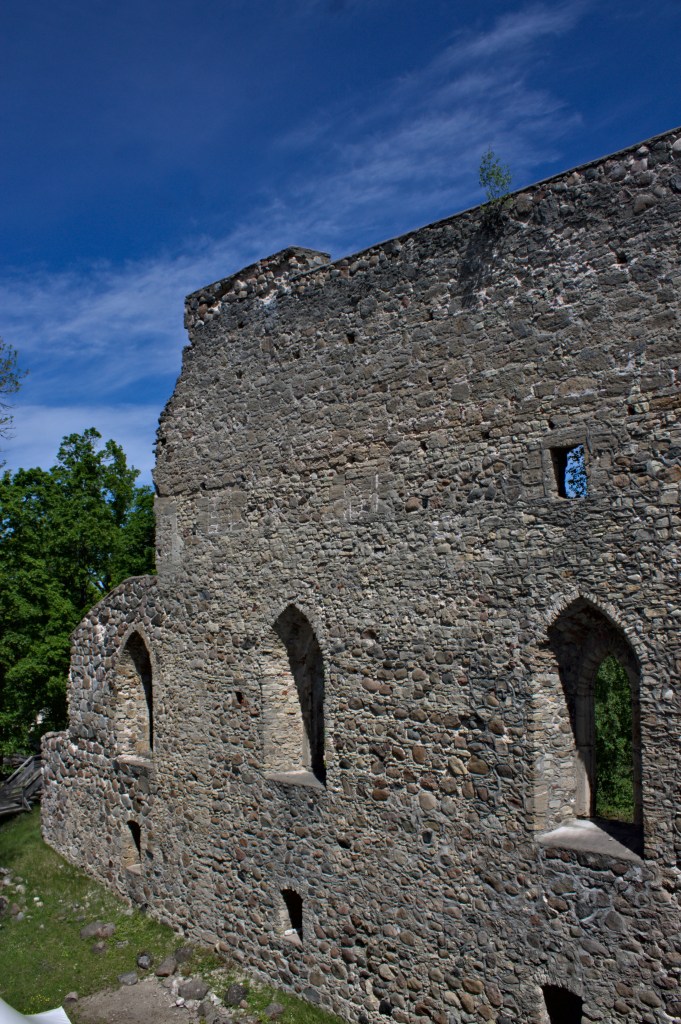


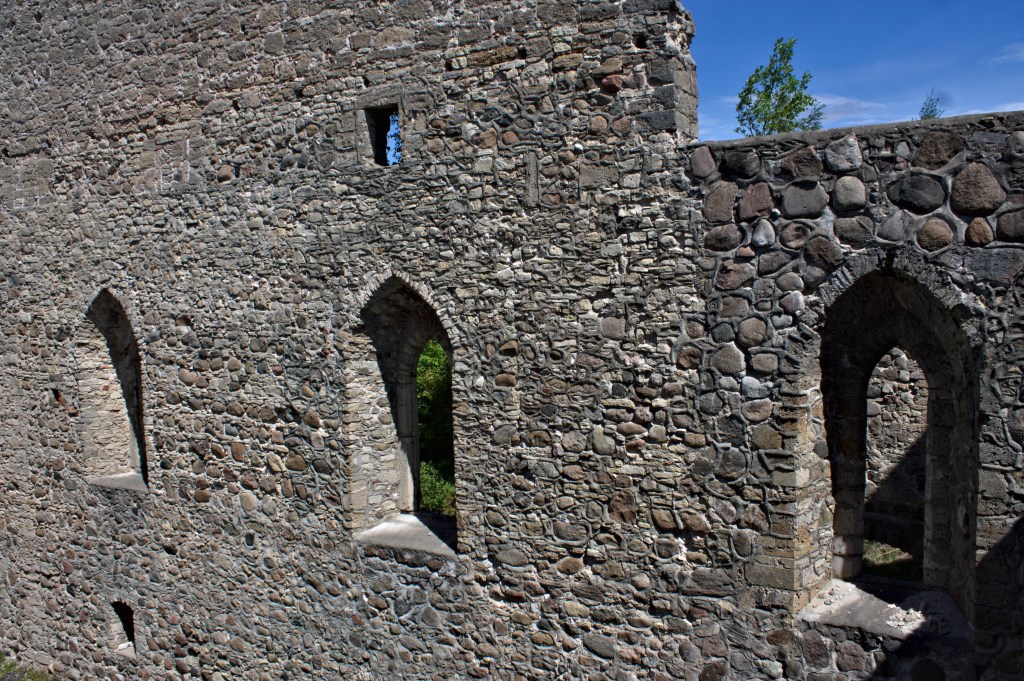

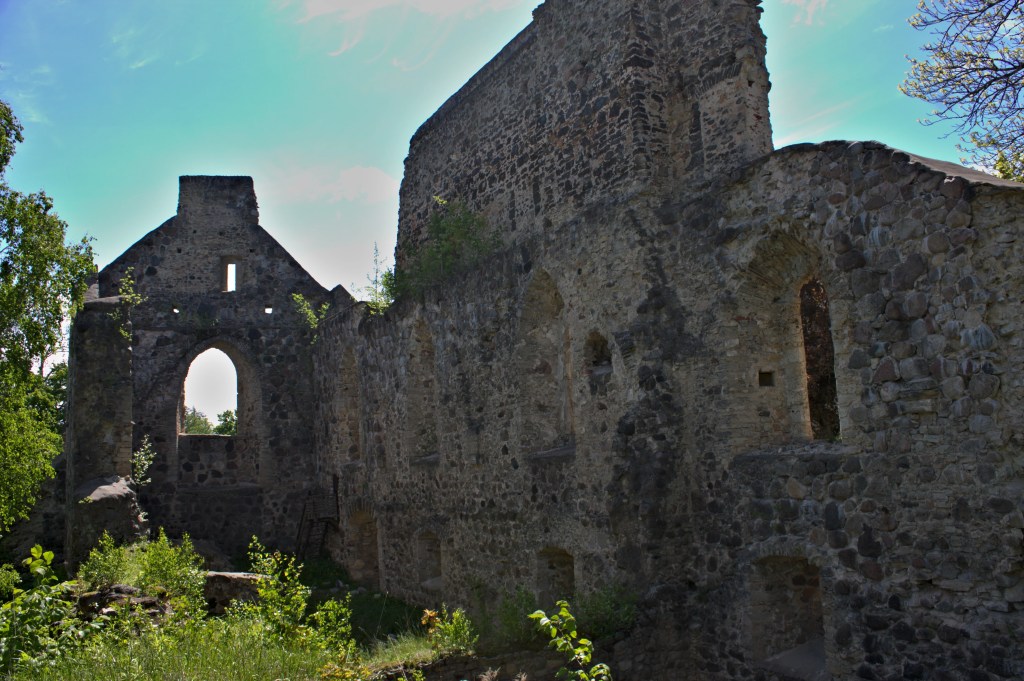
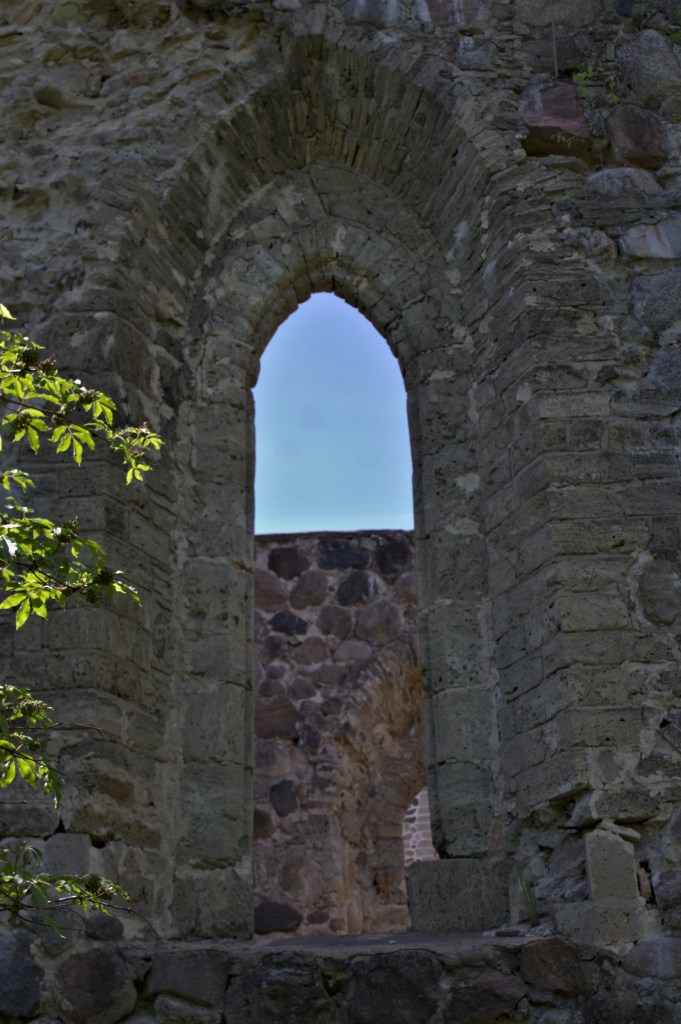
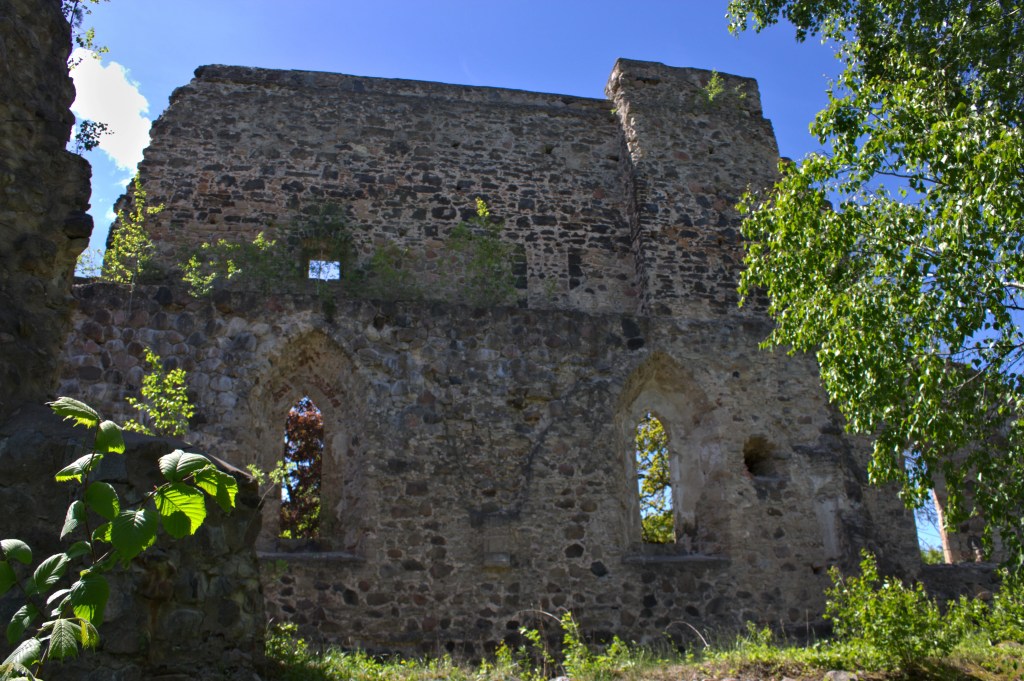


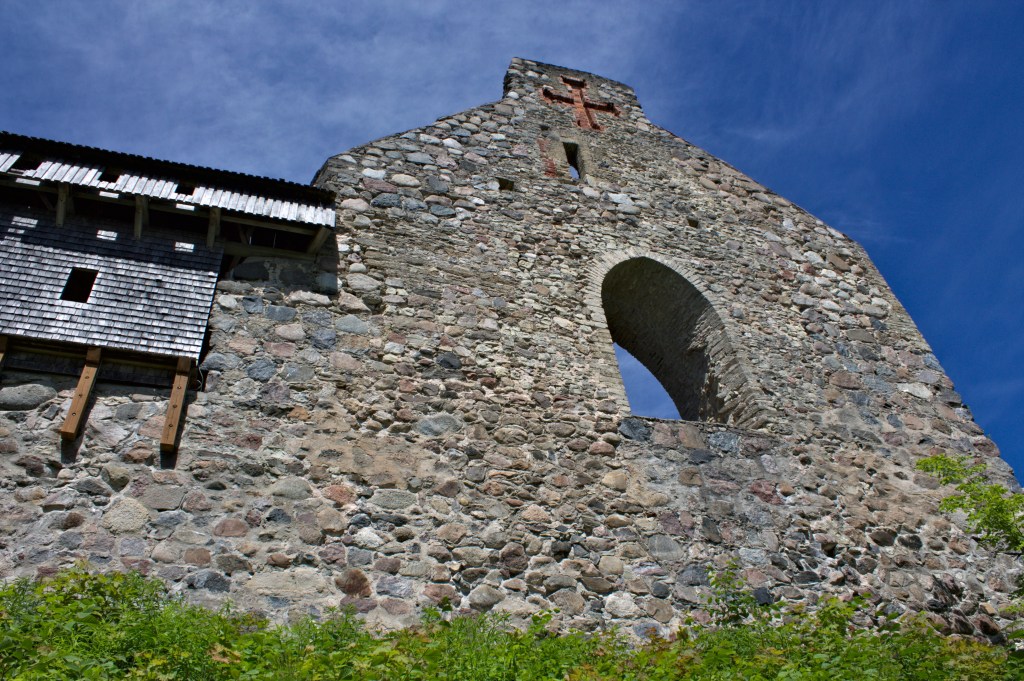


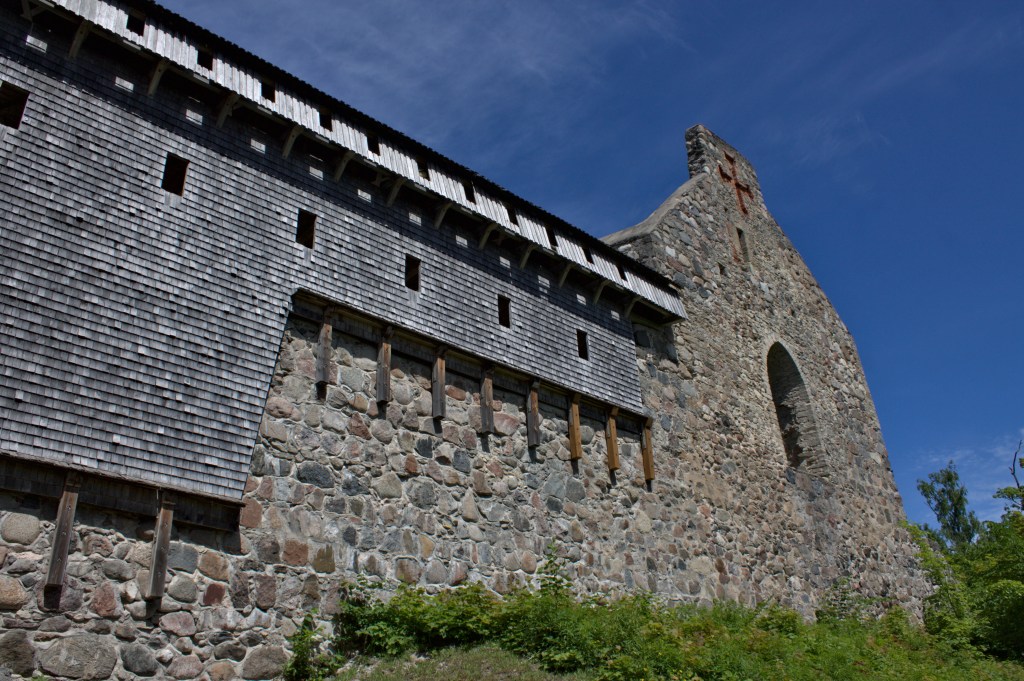
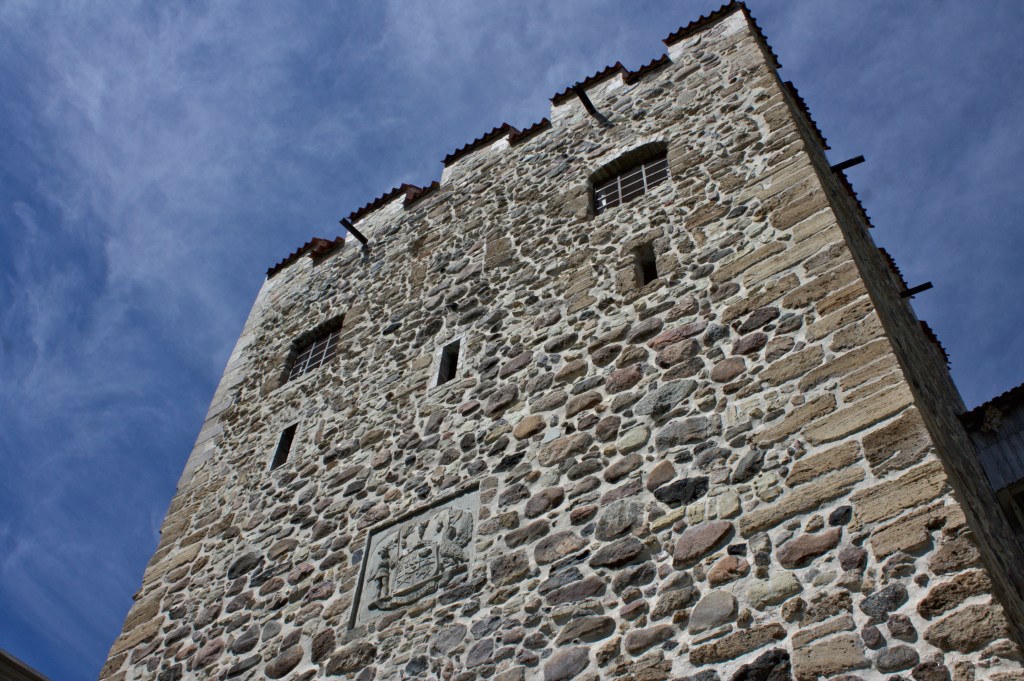

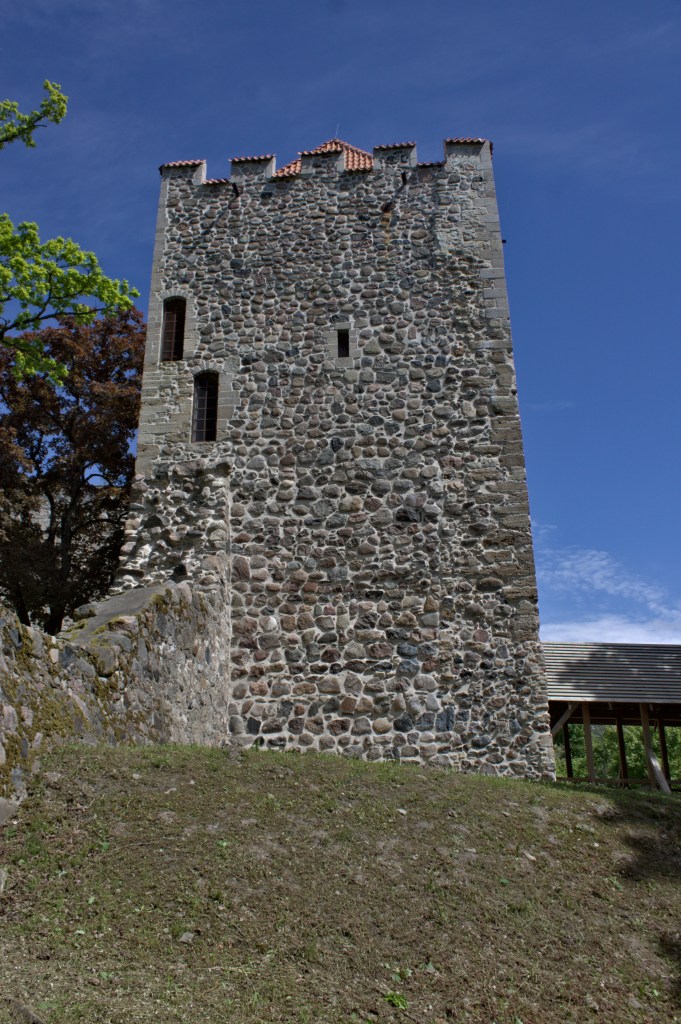
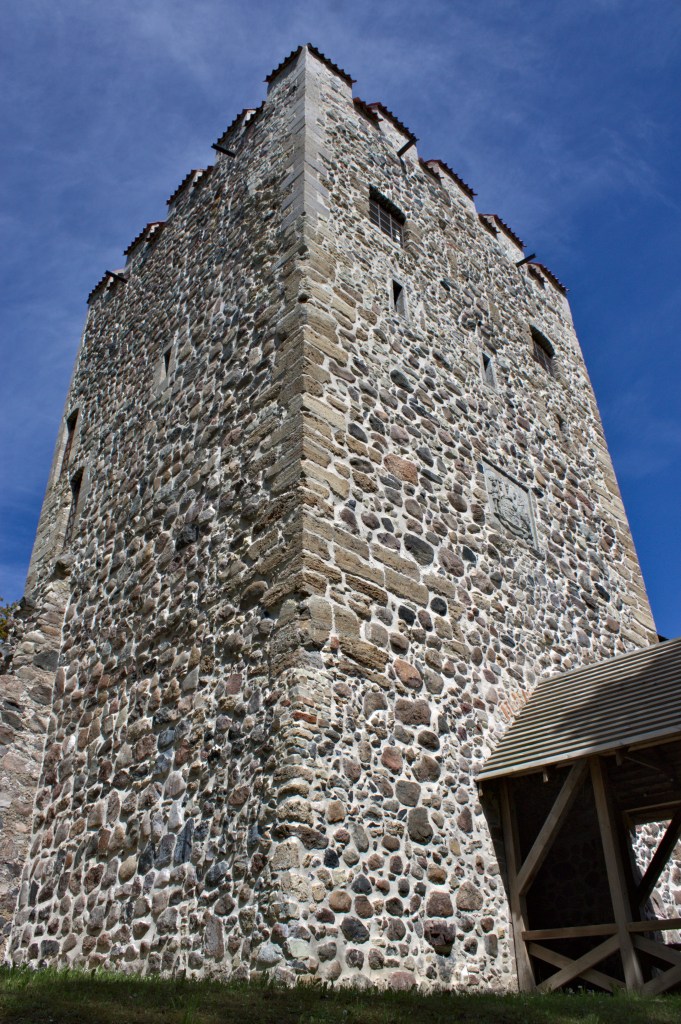

Old Sigulda Castle also known as the Livonian Order Sigulda Castle is situated about 55 kilometres northeast of Riga overlooking the Gauja River, a river that stretches the entire distance of the country of Latvia. The castle was commissioned in 1207 by Master Venno of the Livonian Brothers of the Sword. The Livonian Brothers were a Germanic military force of ‘warrior monks’ who wanted to Christianise the Baltic region by force, they were the only such order outside of the Mediterranean. A split had occurred with the then Bishop Albert of Riga, who had founded Riga in 1201, and also is believed to have originally founded the Livonian Brothers. As part of a land-division treaty the left bank of the Gauja River was taken under the control of the Livonians. The right bank fell under the control of the Bishop, who established Turaida Caslte and thus the two castles were only separated by a couple of miles but also a gorge and the ferocious Gauja River, a river that notably runs the full length of the country. The castle was established to serve as a base for battling the local pagan Livonians. The Livonians Brothers of the Sword faced their toughest challenge during the Battle of Saule in 1236 when Volkwin, the Grand Master of the Brothers of the Sword, led an aggressive crusade into the pagan Semigallian and Samogitian territories. After one skirmish the armoured knights found themselves trapped in a bog, the light cavalry of the pagans surrounded them and slaughtered thousands of crusaders alongside 60 knights. The order lost its entire leadership and military core in one battle and facing widespread pagan revolts on areas they had previously conquered they turned to their rivals the Order of Teutonic Knights. In May 1237 Pope Gregory IX sanctioned the absorption of the remaining Sword Brothers into the Teutonic Order. The absorbed branch was renamed the Livonian Order and was semi-independent though still subject to the Grand Master of the Teutonic Knights based in Prussia, it was led by one of the few remaining commanders of the battle of Saule Gerfried Wrideke.
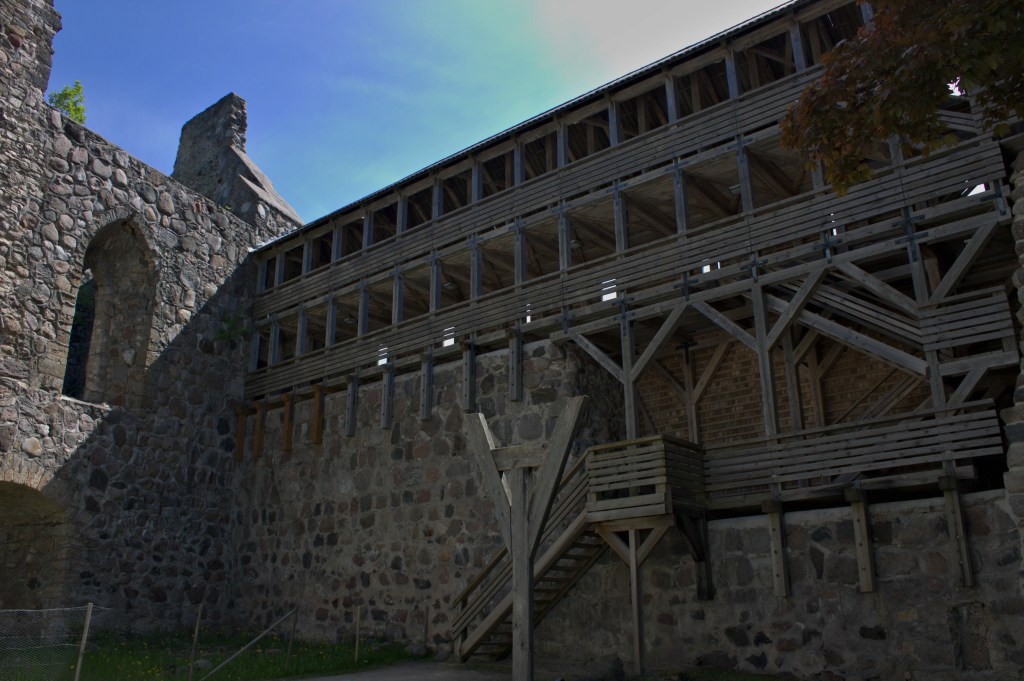
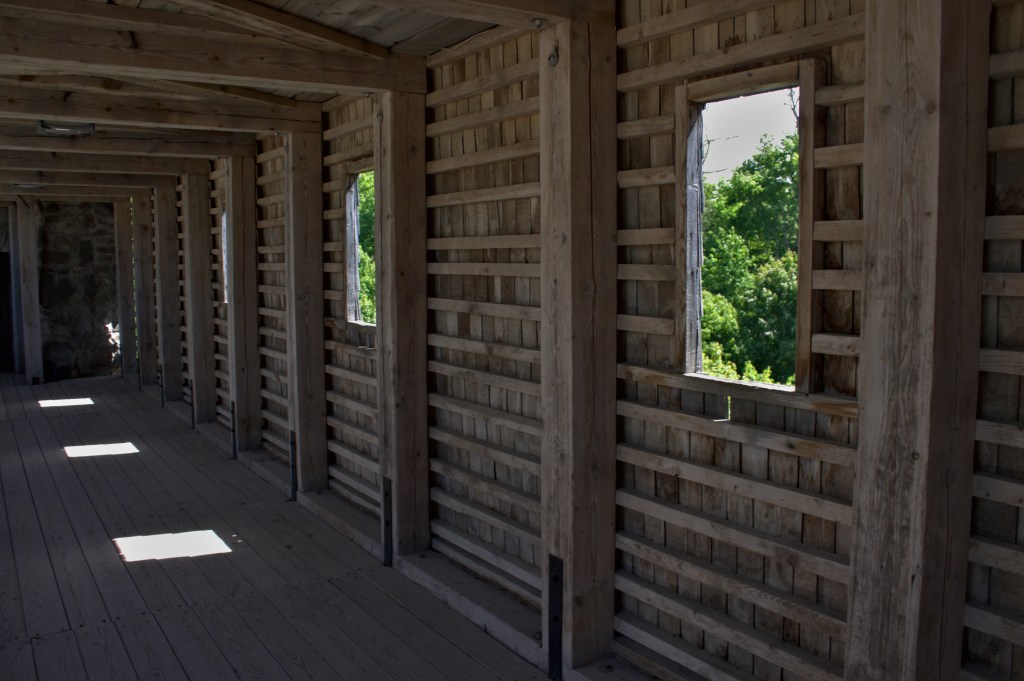
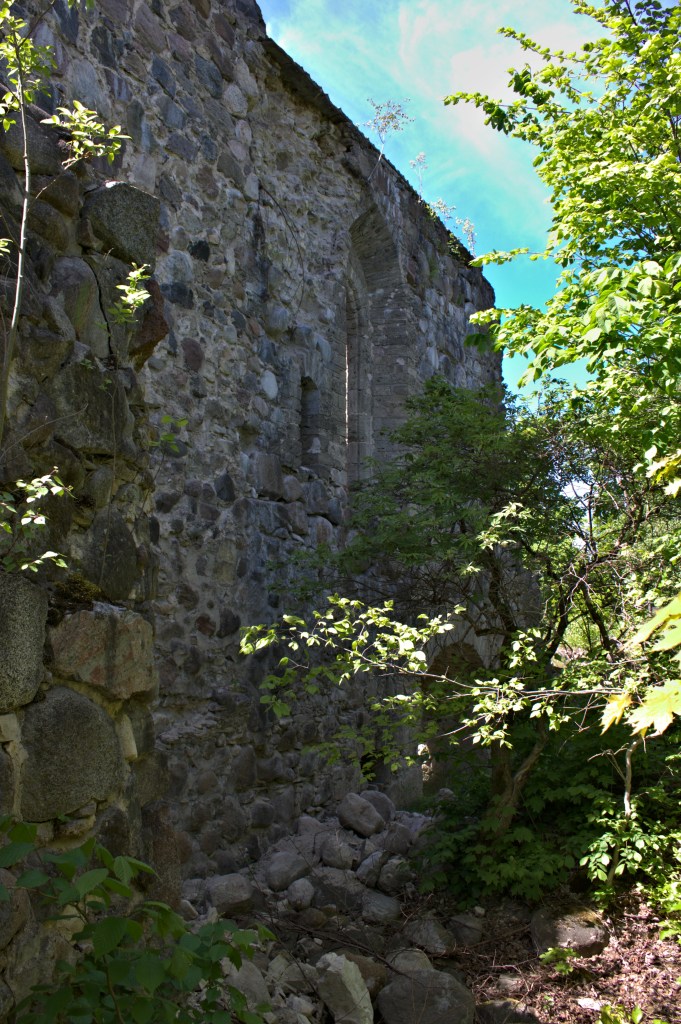
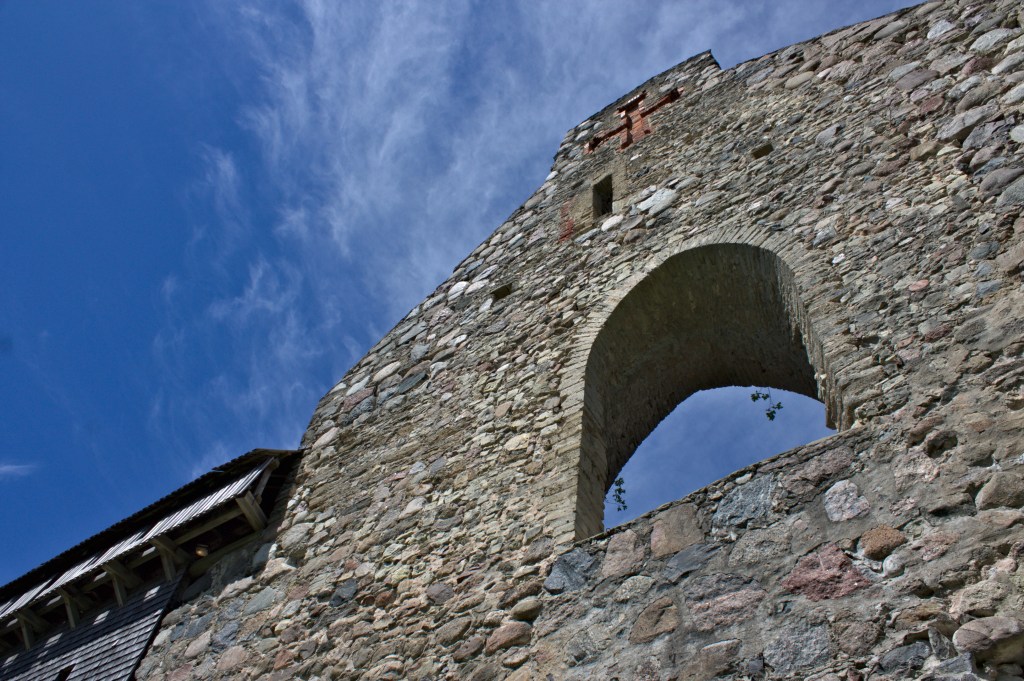
The Livonians continued to conquer additional days of modern day Latvia and the castle was expanded into a convent style building throughout the 13th and into the 14th century. In 1432 the castle became the home of the Land Marshal of the Livonian Order, the second highest position within the order. The history of the castle in the late 16th century is of conquest and re-conquest during the Livonian War which lasted 25 years from 1558-1583. The war was about control of Old Livonia (part of modern day Estonia and Latvia) and a succession of battles between the Tsardom of Russia and a coalition of the Dano-Norwegian Realm, the Kingdom of Sweden and the Union of the Grand Duchy of Lithuania and the Kingdom of Poland. The castle was damaged at the beginning of the war but was repaired and became part of the Duchy of Livonia and in 1566 the residence of the governor of Livonia. The castle was damaged again during the Polish-Swedish war at the start of the 17th century. In 1625, after the war the King of Sweden gave Sigulda to as a gift to his privy councillor and the castle was restored again. At the beginning of the 18th century the castle was abandoned during the Great Northern War, a twenty-one year conflict between Russia and allies Denmark, Norway, Saxony, Poland and Lithuania against the might of Sweden in what was known as its ‘Sweden of the Great Power Era’ (in Swedish: stormaktstiden). In 1737 the castle became a private estate, initially the Governor of Livland and then the von der Borch family. The castle fell further into ruin but at the beginning of the 19th century and as the trend for romantic ruins swept across Europe the castle was somewhat remodelled and a gate was added to the front part of the castle in 1867. The castle was never inhabited again and a new castle 100 metres away was instead built by Prince Kropotkin’s family. After World War I and the establishment of the Republic of Latvia the castle fel under the monument board and some reconstruction work was undertaken. The real work however began in 1962 and in continued on and off until 2012.
I wholeheartedly recommend a visit to Sigulda if you happen to find yourself in Riga, a train runs from the central station straight there a few times a day. It’s a beautiful area and the train trundles along at a pleasant relaxing pace, doing a 50km trip in just over an hour.
GPS: 57.1662, 24.84997