


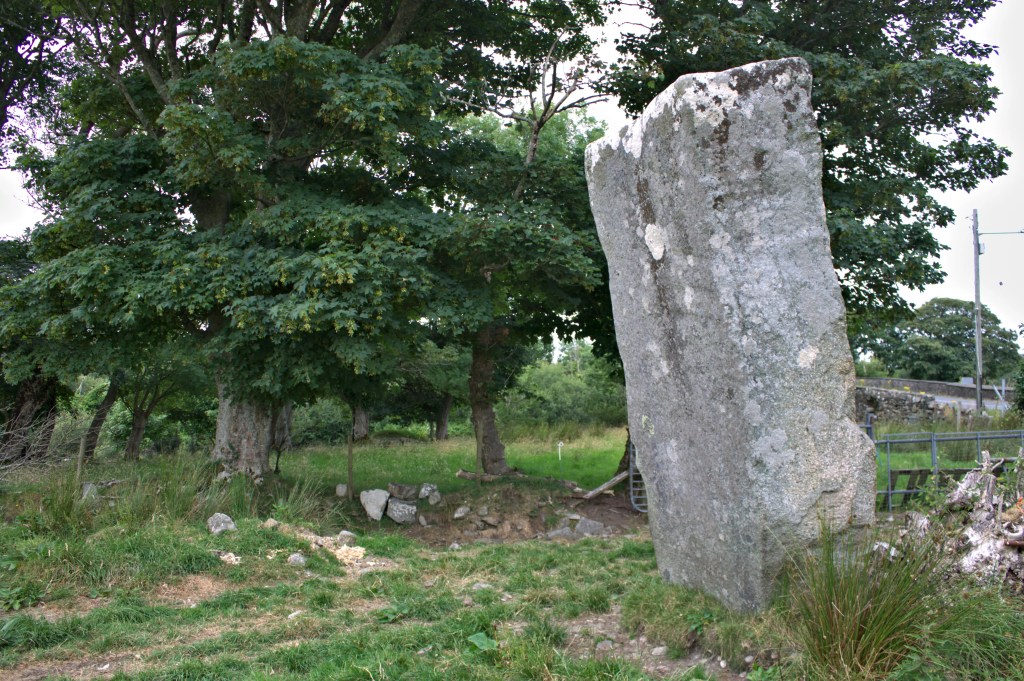
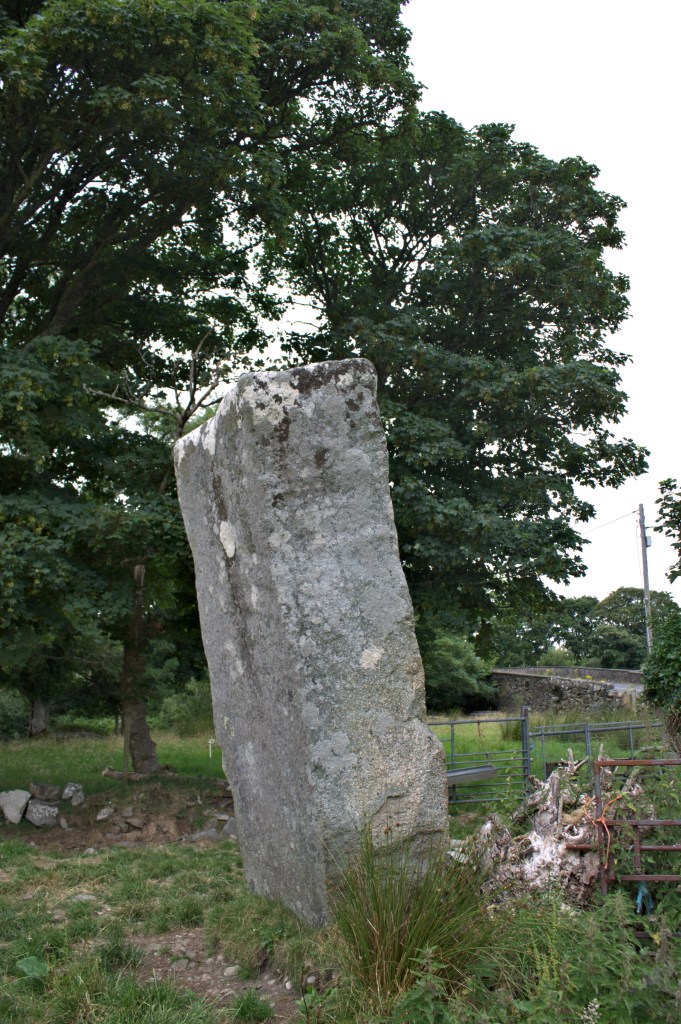

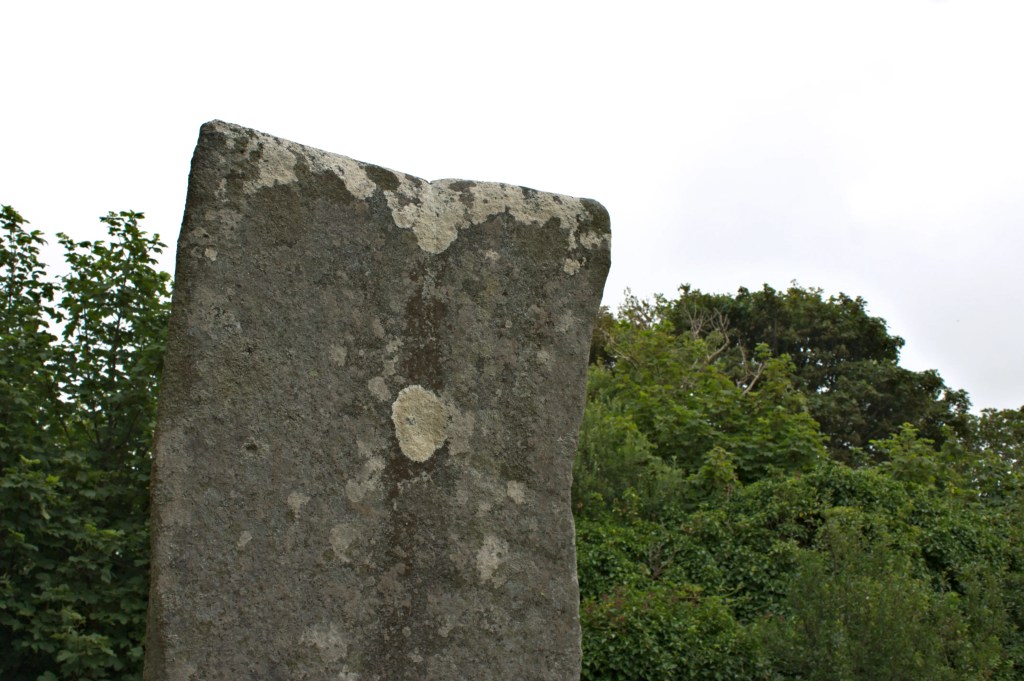

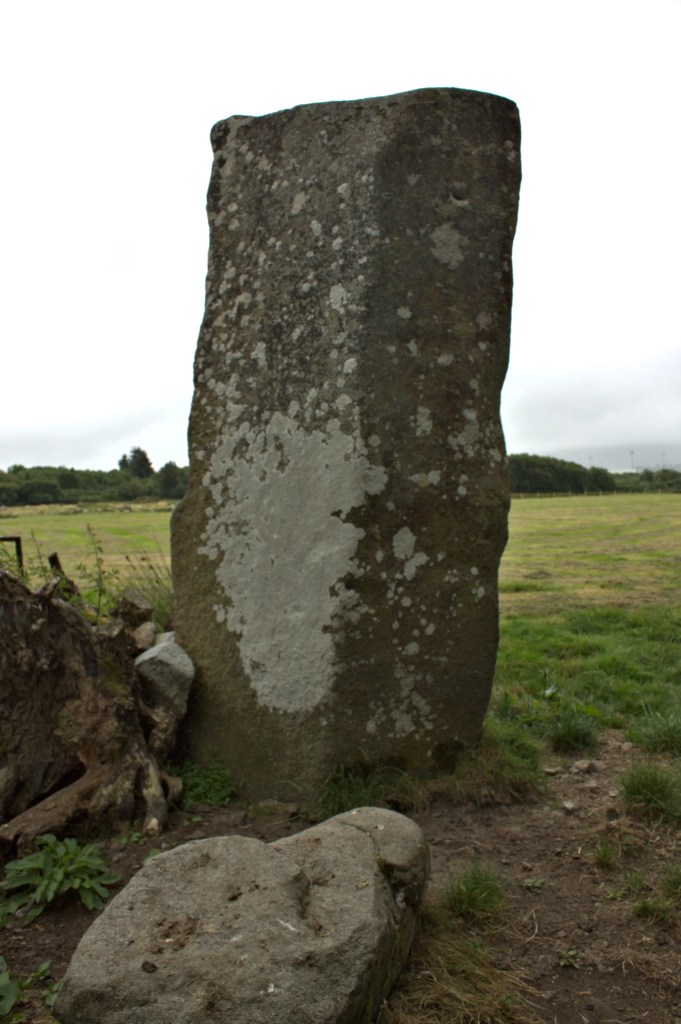

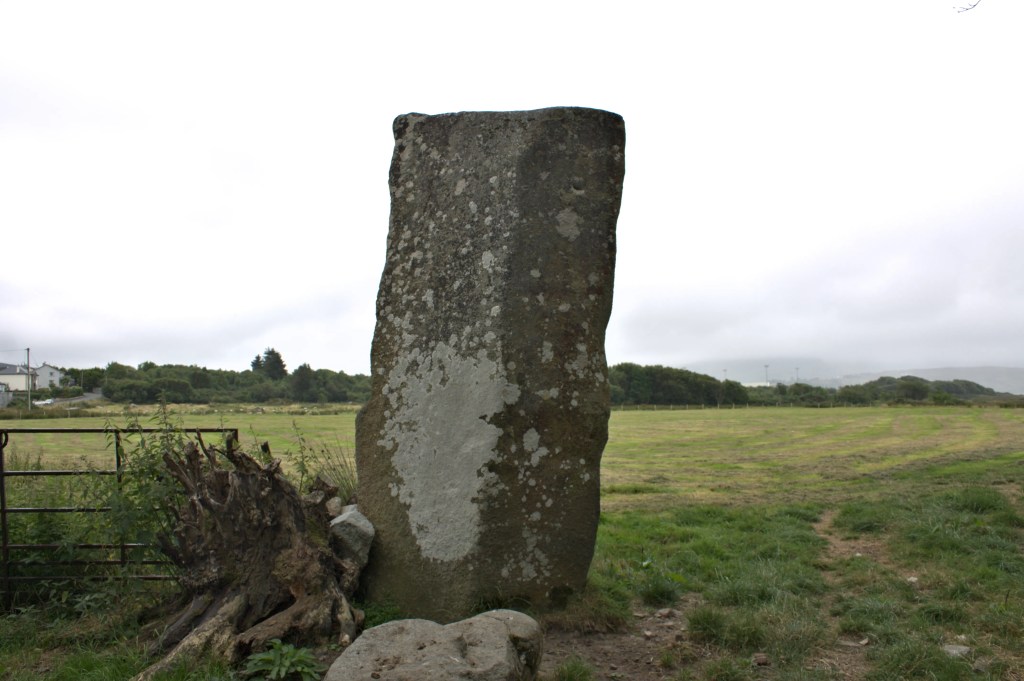
Owenea standing stone is a colossal megalith situated near the south bank of the river of the same name, near Ardara in County Donegal. The stone sits behind the remains of an old farmhouse and stands over 3 and a half metres in height, 1.5 metres in width and has two cup mark indentations. It leans slightly towards the west-southwest. Local mythology associates the stone with Fionn Mac Cumhaill and it is known as ‘Fionn Mac Cumhaill’s shoulder stone’ because he purportedly threw the stone from Cloc na Cléire Mountain where it landed upright. Cloc na Cléire is a name that comes from folklore and does not represent any existing mountain, it roughly translates as the ‘Stone of the Clergy’. Why Finn would have wished to throw the rock is unknown but the story is probably tied to the Bluestack Mountains and is one of the many etiological myths that abound in Ireland
I did find another retelling of the story from the Dúchas Schools Collection of 1937, the following comes from an informant called Pádraic Mac an Ghoill and written down by Seán Ó hEochaidh from Ard an Rátha in Donegal, “At the Owenea Bridge close to my home there is a regular shaped standing stone about twice the height of a man. There are a very few traditions connected with it but here is one;- It is said that a man named Gallagher owned the farm at one time on which the stone stands. He went to build a byre and used this stone as part of the wall, or rather made it serve as part of the wall. Well every morning when he went out all his cattle were loose and roaring through the byre. This continued for weeks and at last he had to remove the byre to another place. The standing stone is still there with nothing near it but the brushwood that grows round it.
There is another tradition that this stone was dropped there by Fionn MacCool, and another that it was left there by Feargowan a brother of Finngeals from whom Lough Finn takes its name. A short distance away in the direction of Doohill are two or three other standing stones not so regularly shaped as the one at the Owenea Bridge, but it is plain that they were placed there by the hands of man as there is a rough pedestal under each. There is a vague tradition that a battle was fought here and that those standing stones mark where the chieftains of the battle fell.”
Though the reason for its placement is lost to antiquity it is still a fantastic and impressive standing stone and well worth the visit if passing through this area of Donegal.
GPS: 54.775, -8.40959