

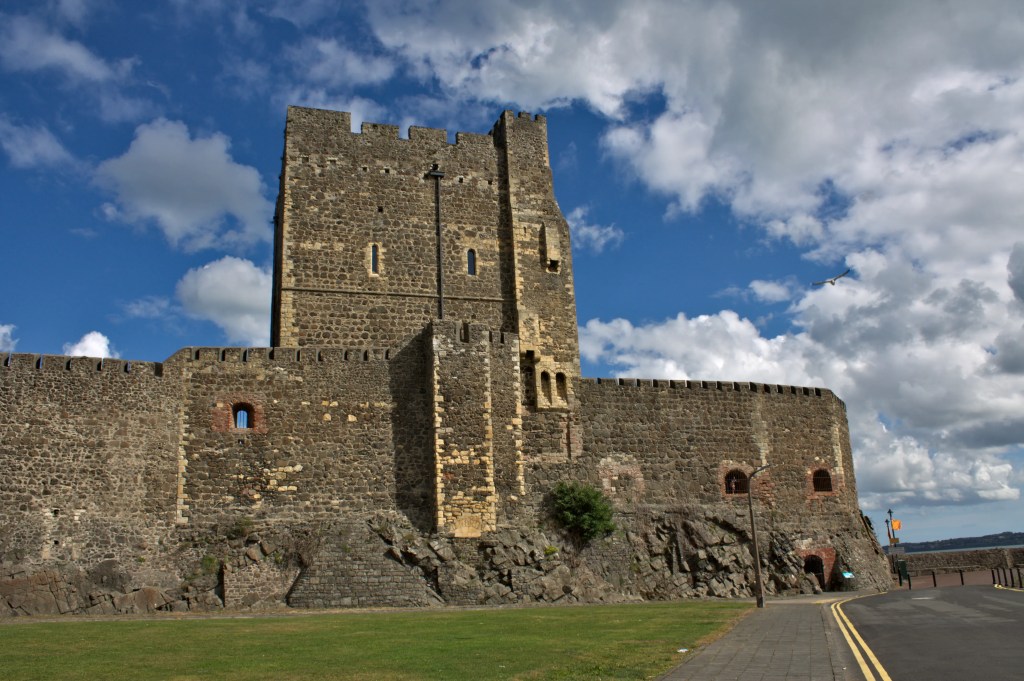
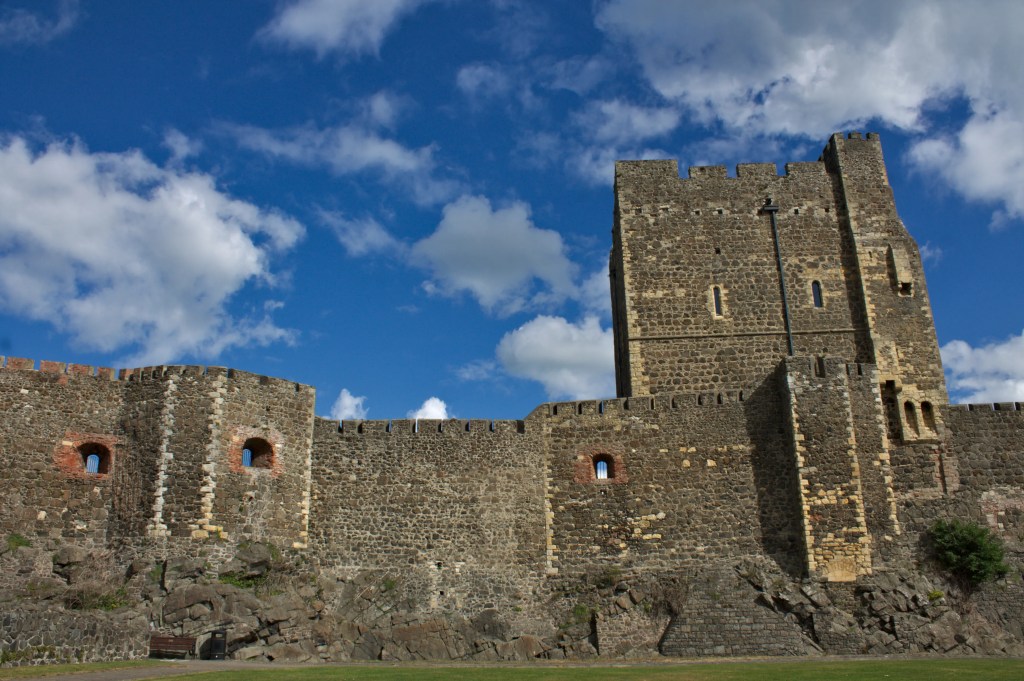

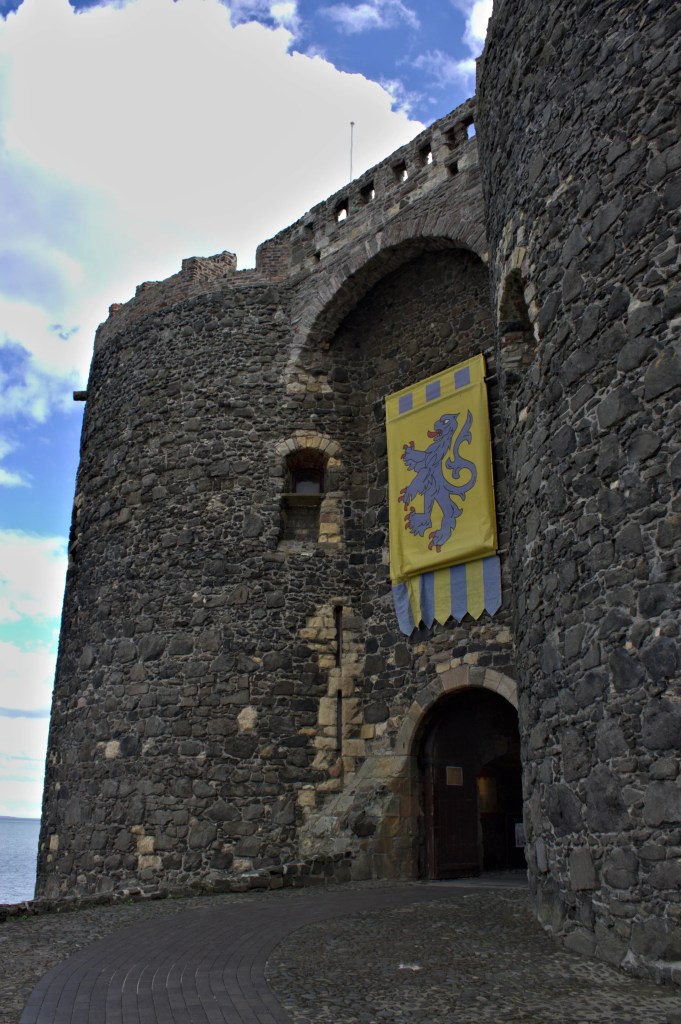
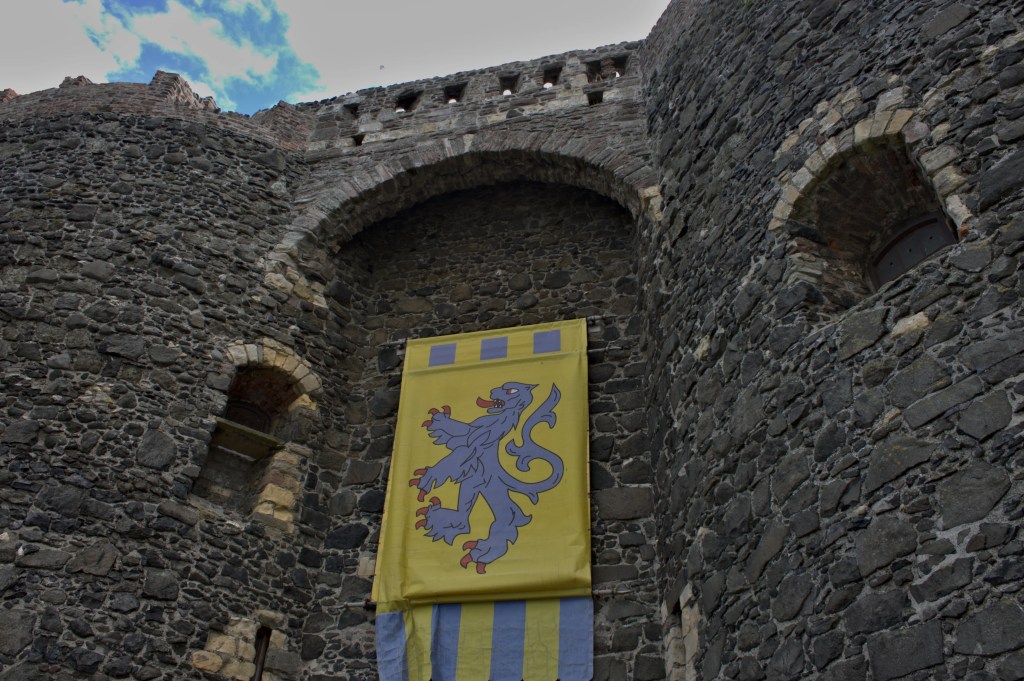


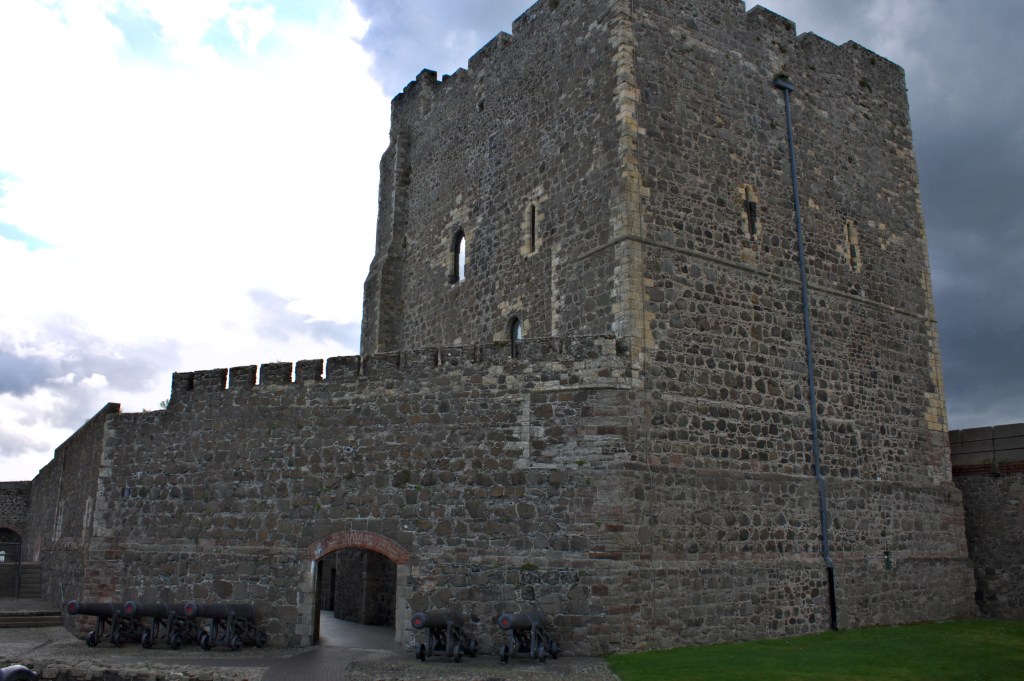

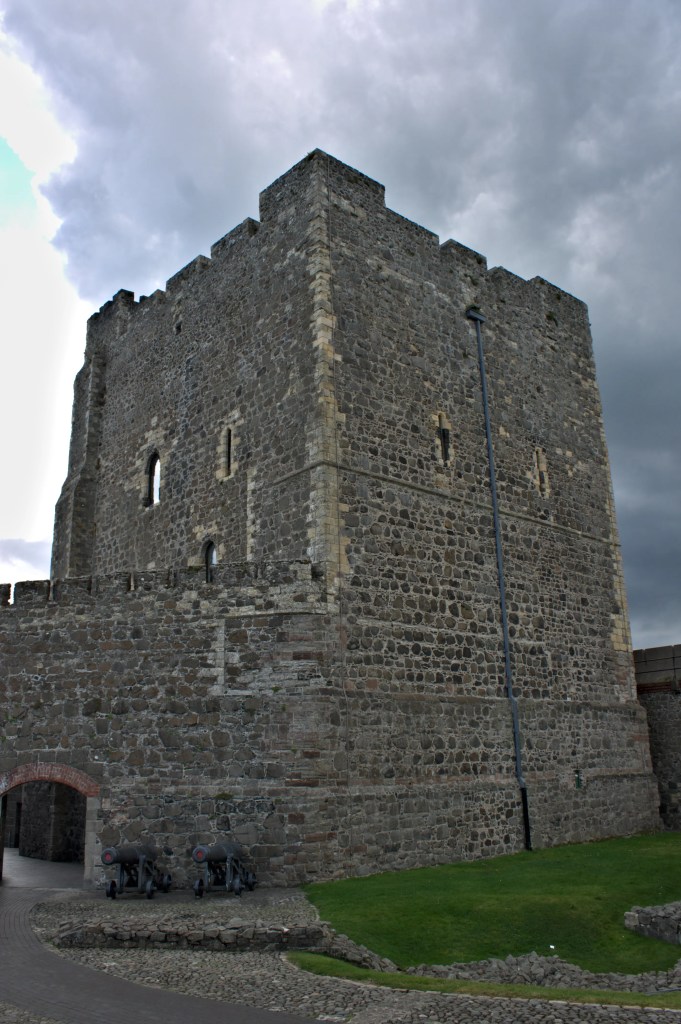
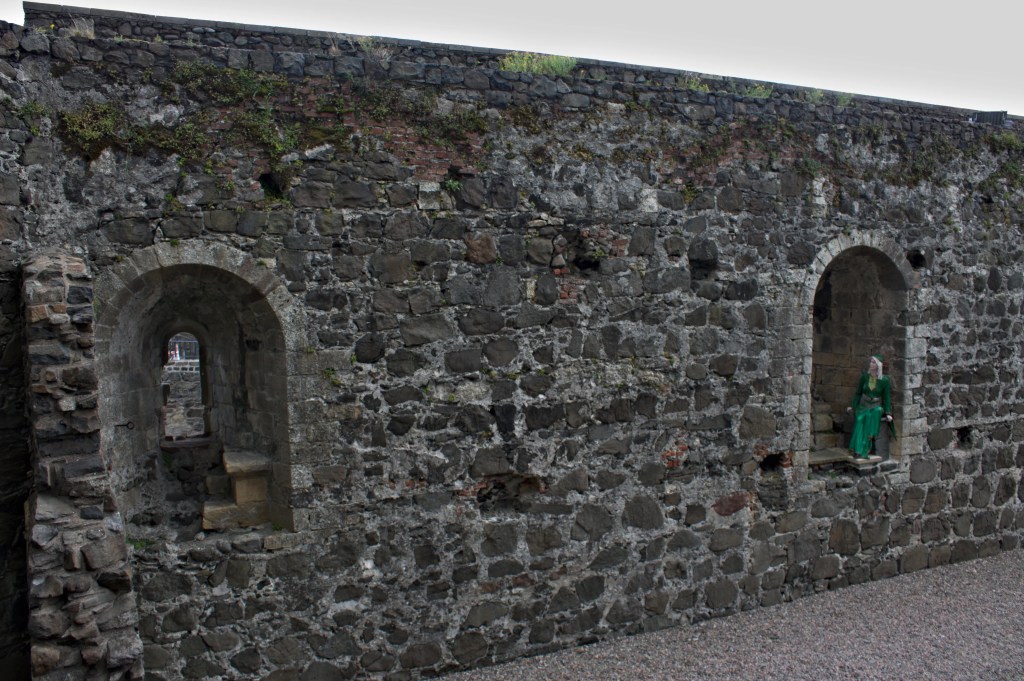
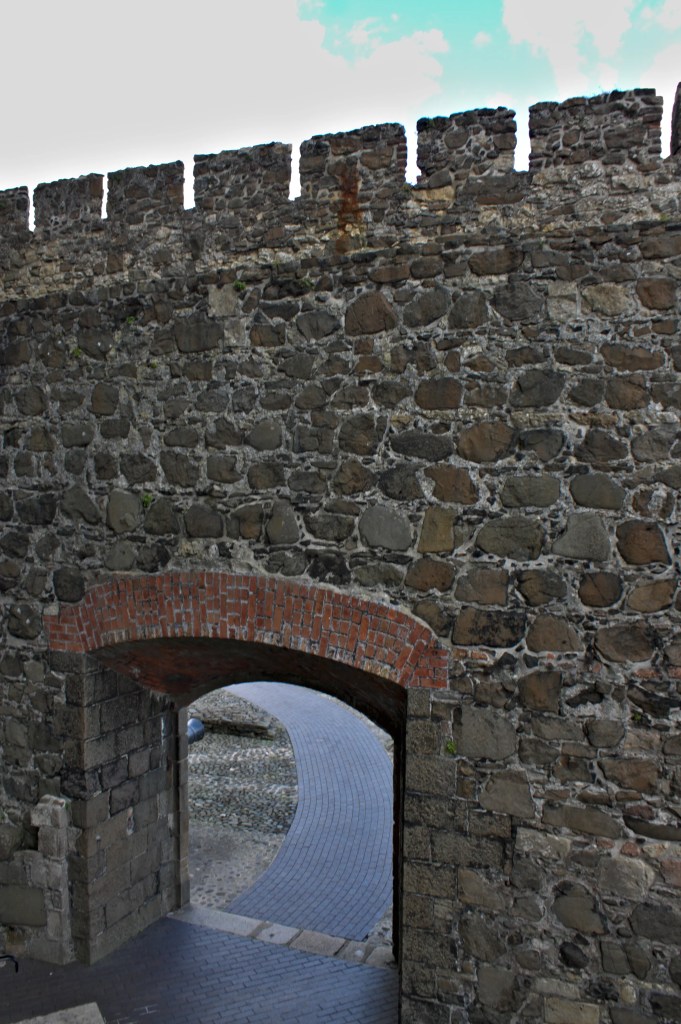
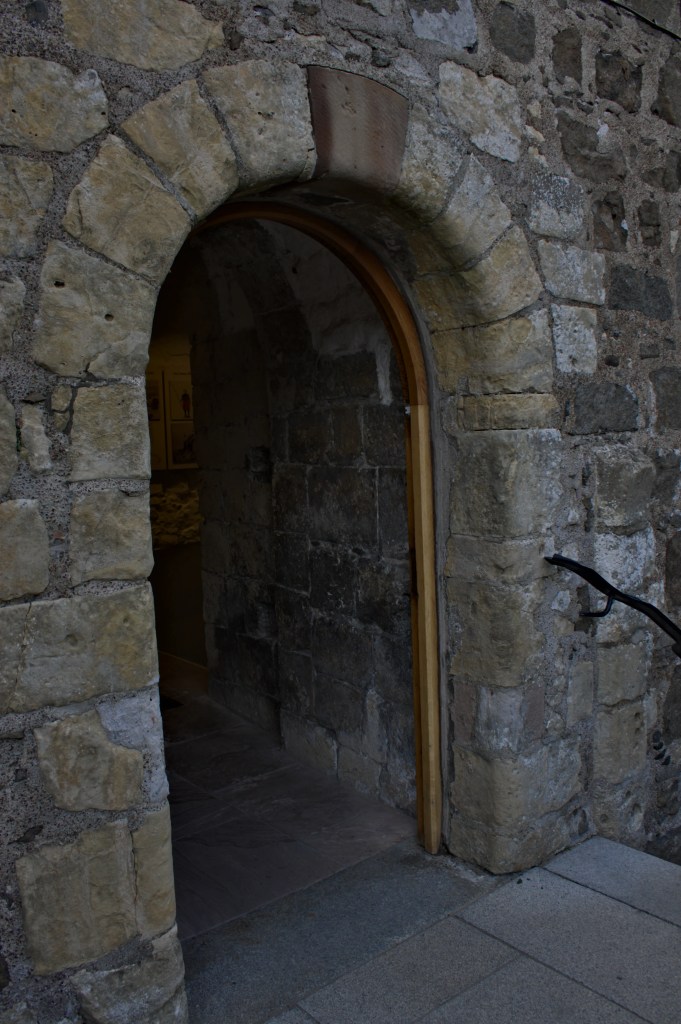
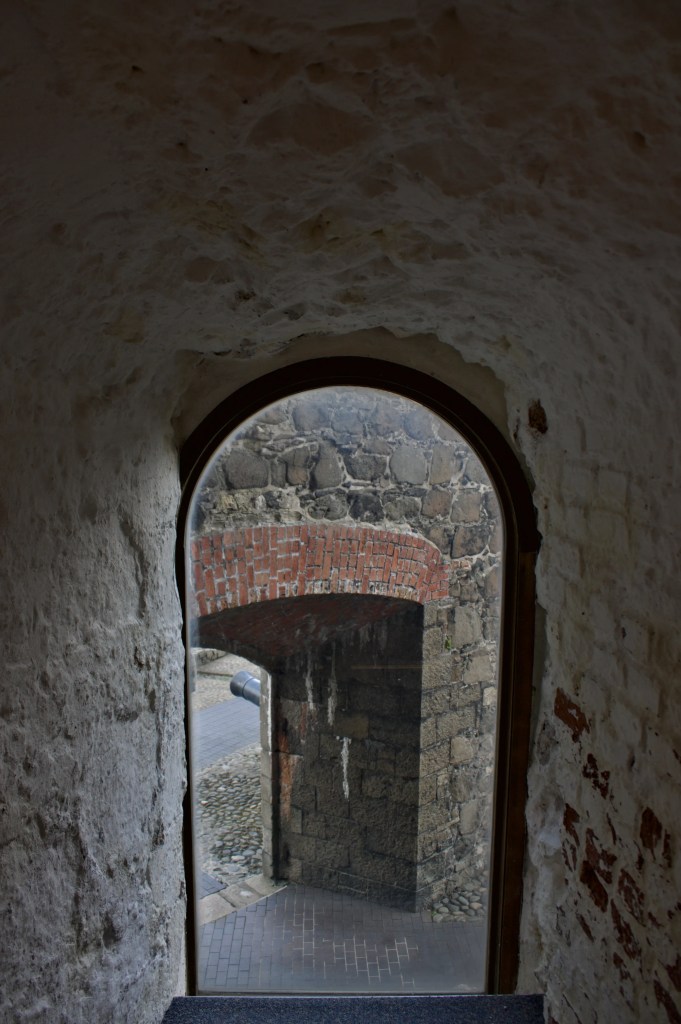
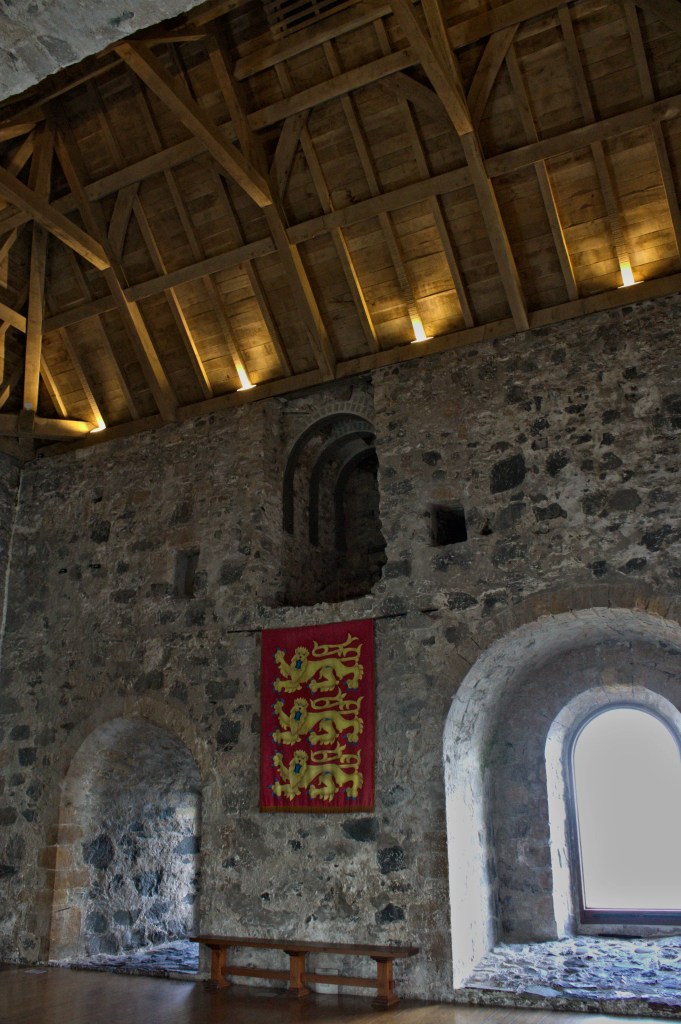
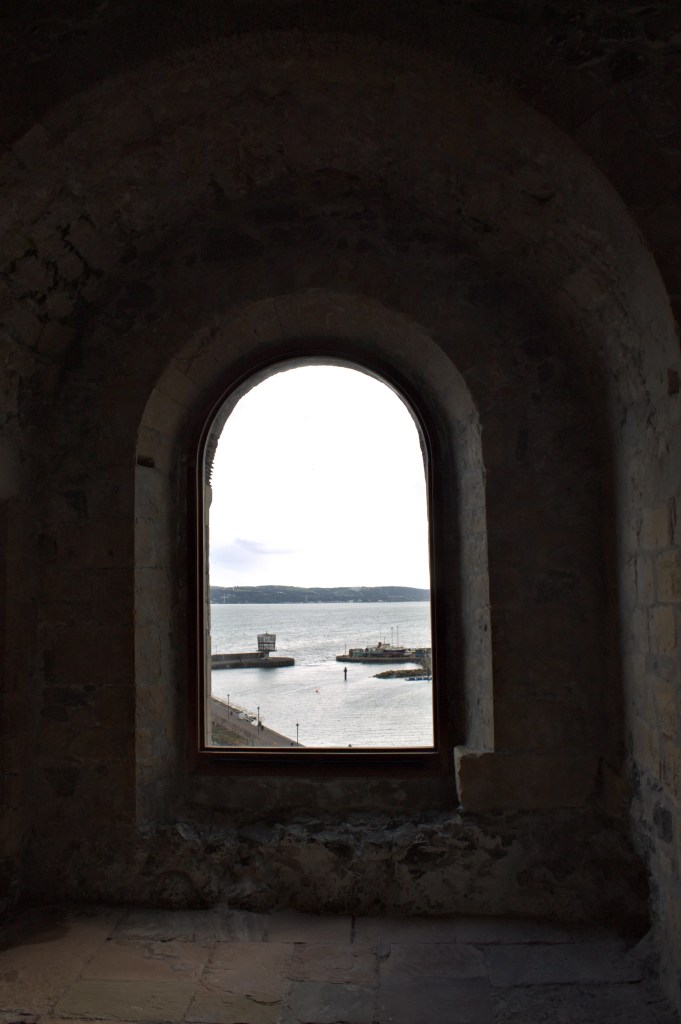

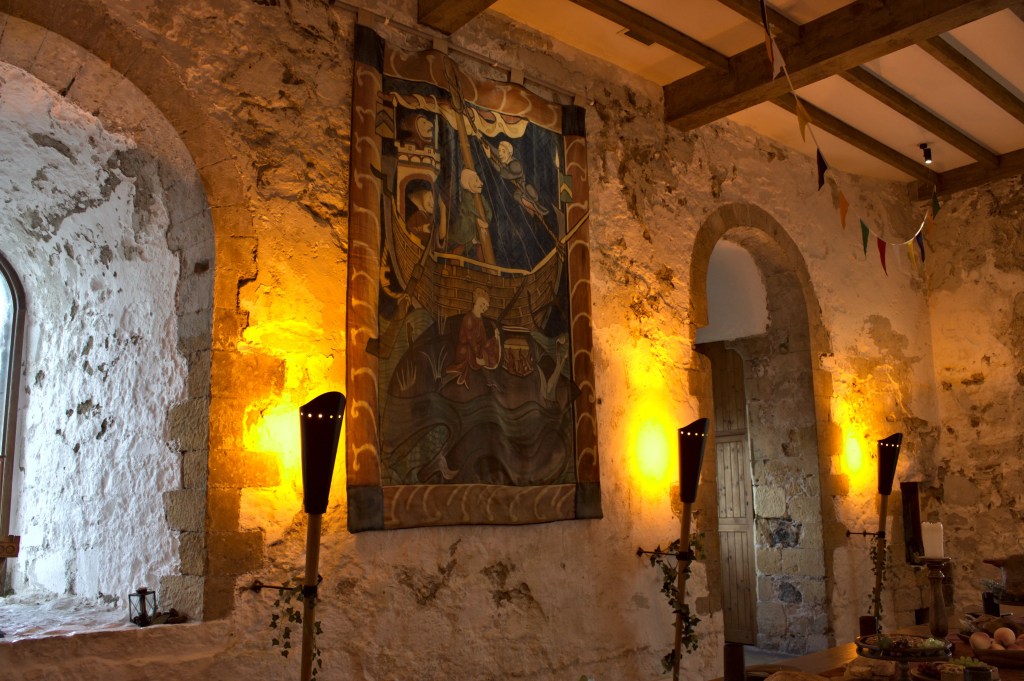
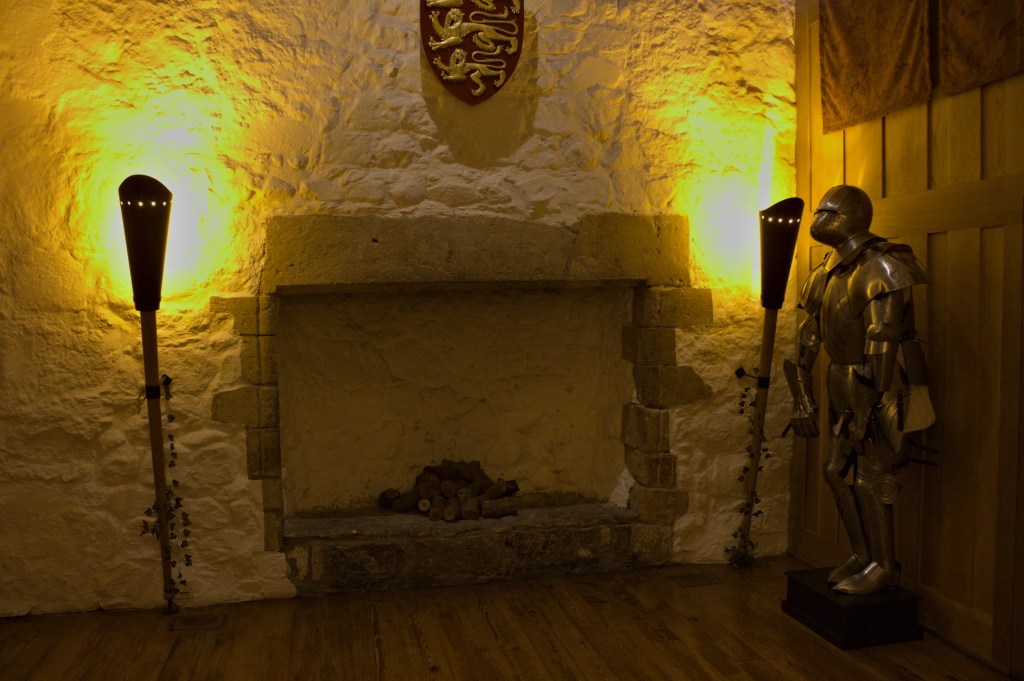




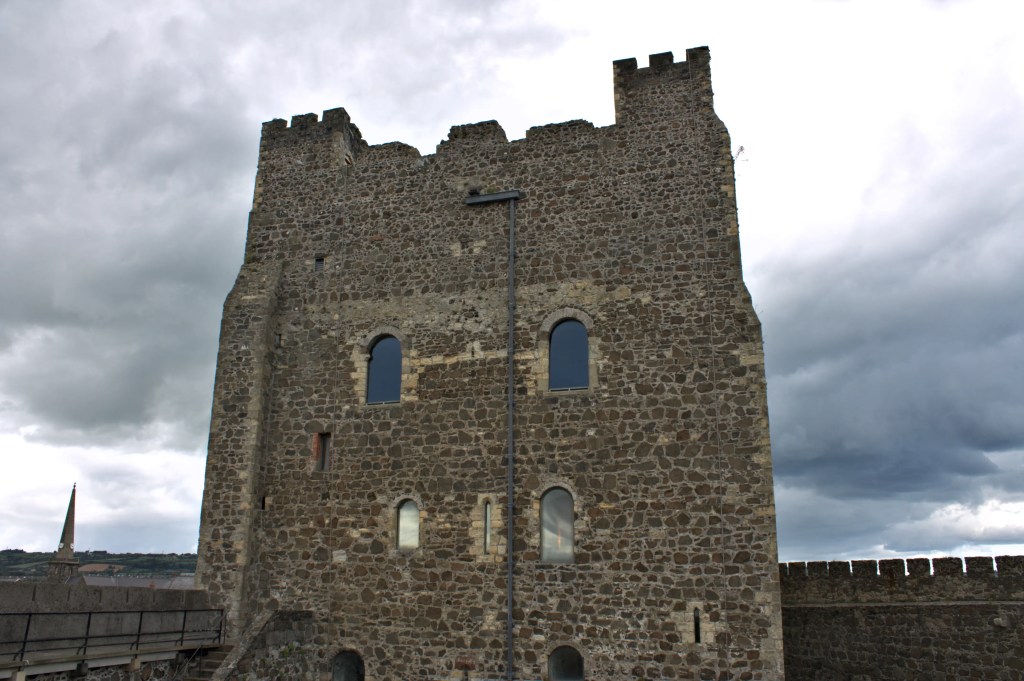
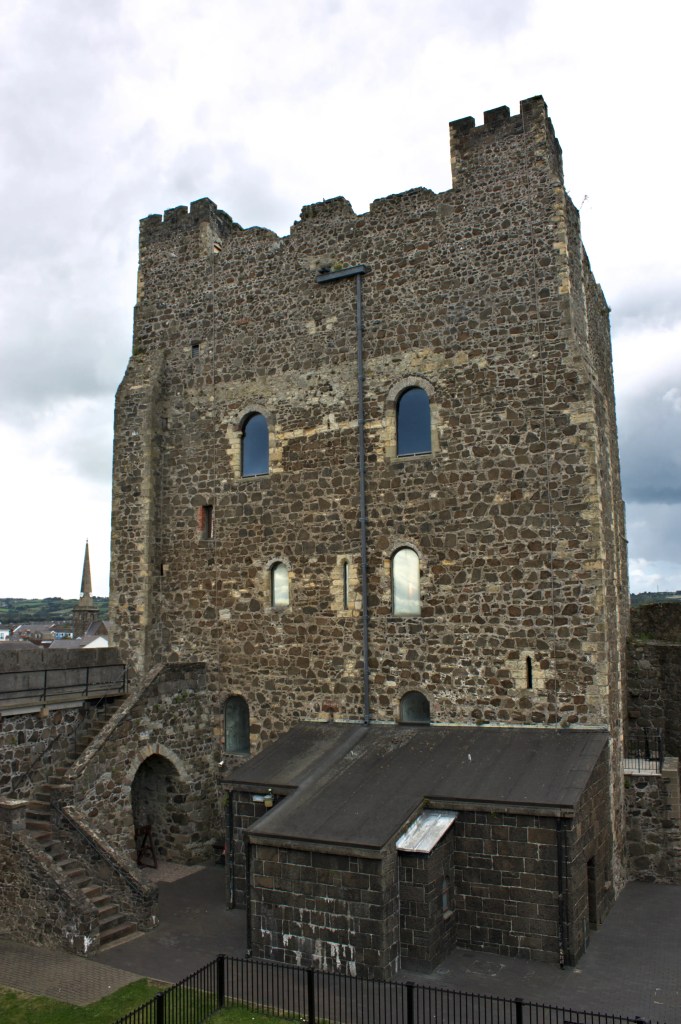
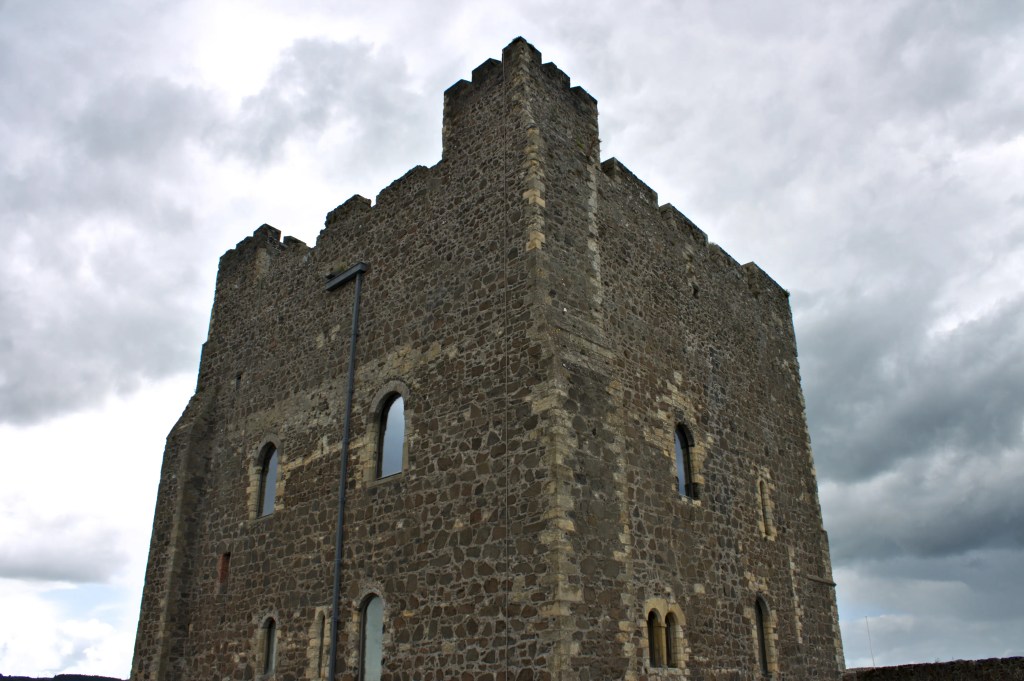
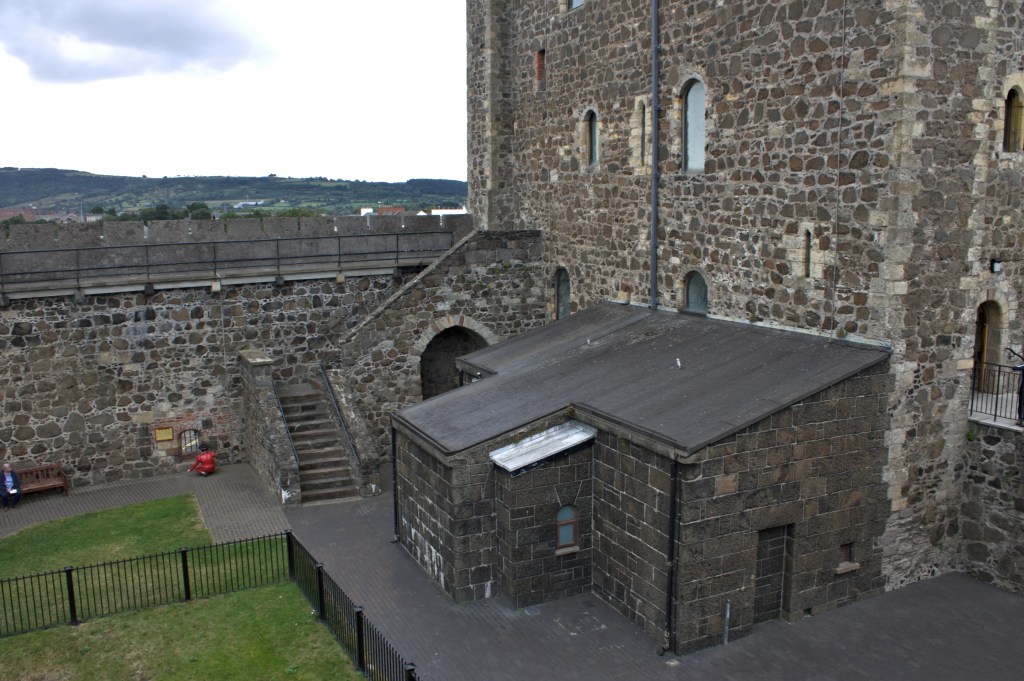

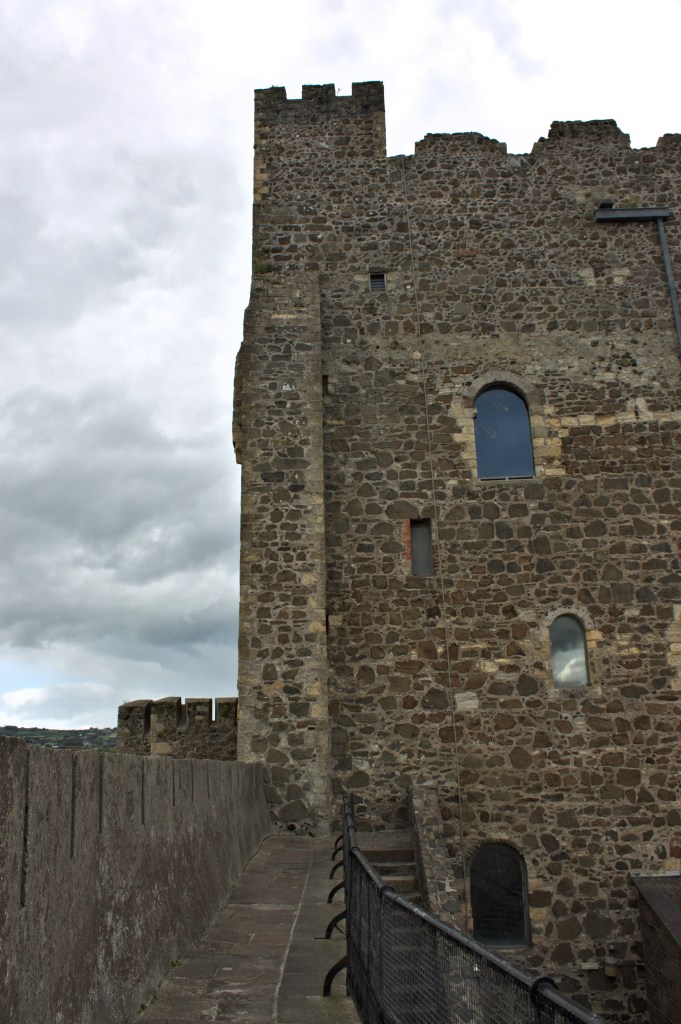
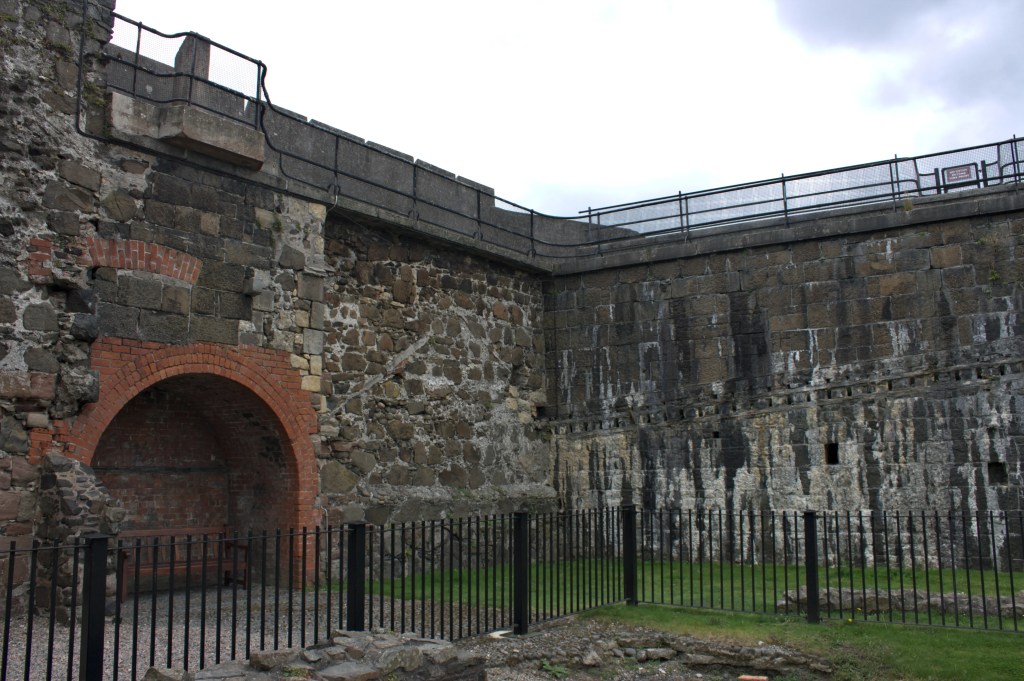


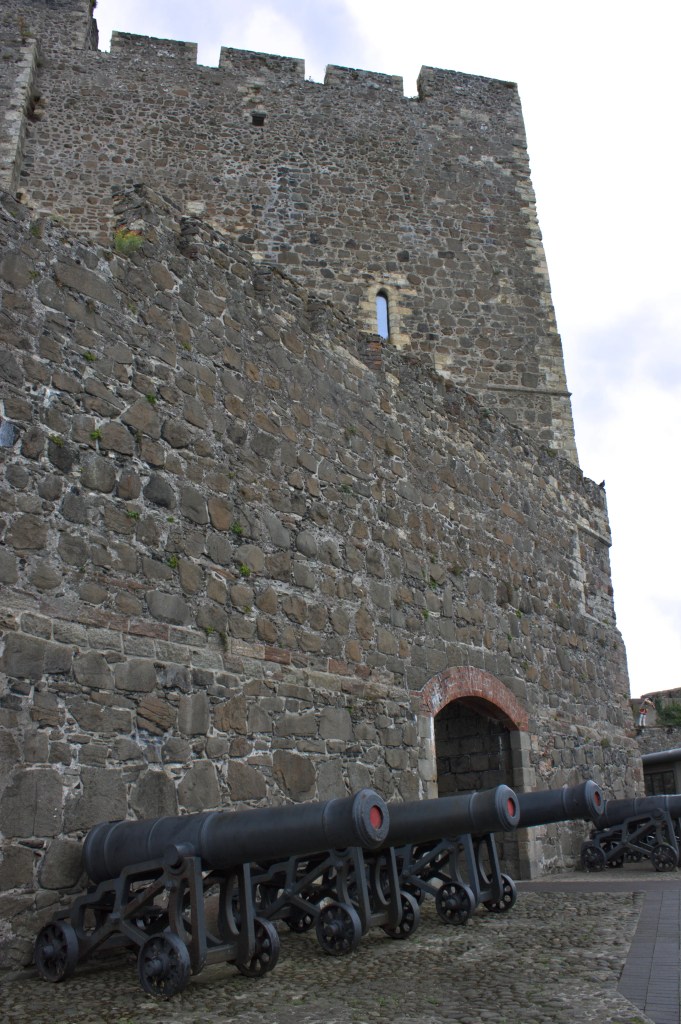
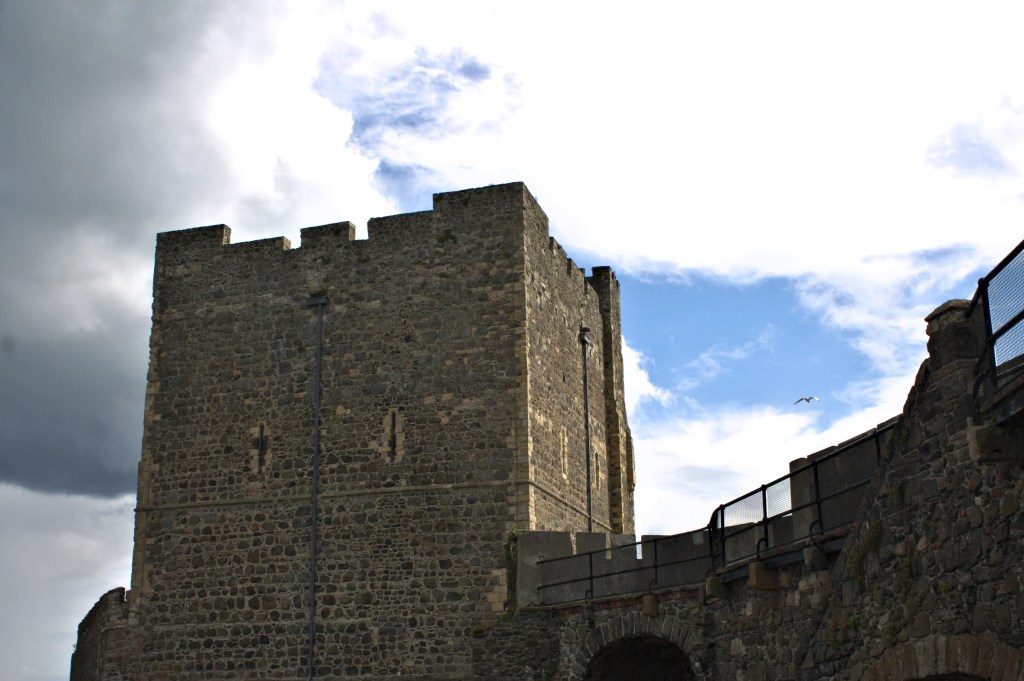
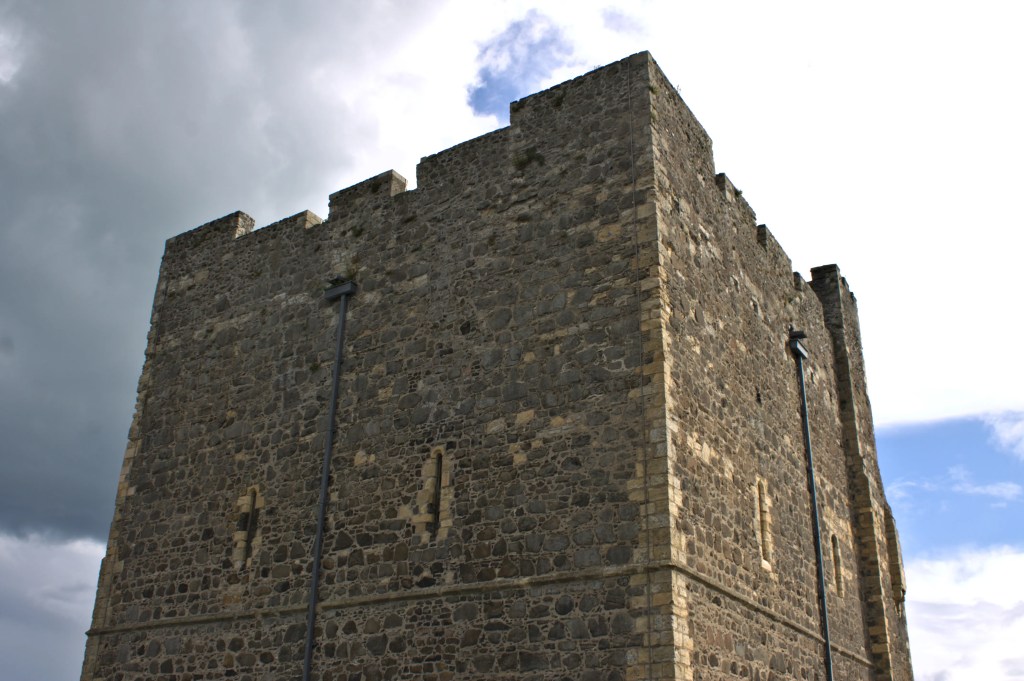
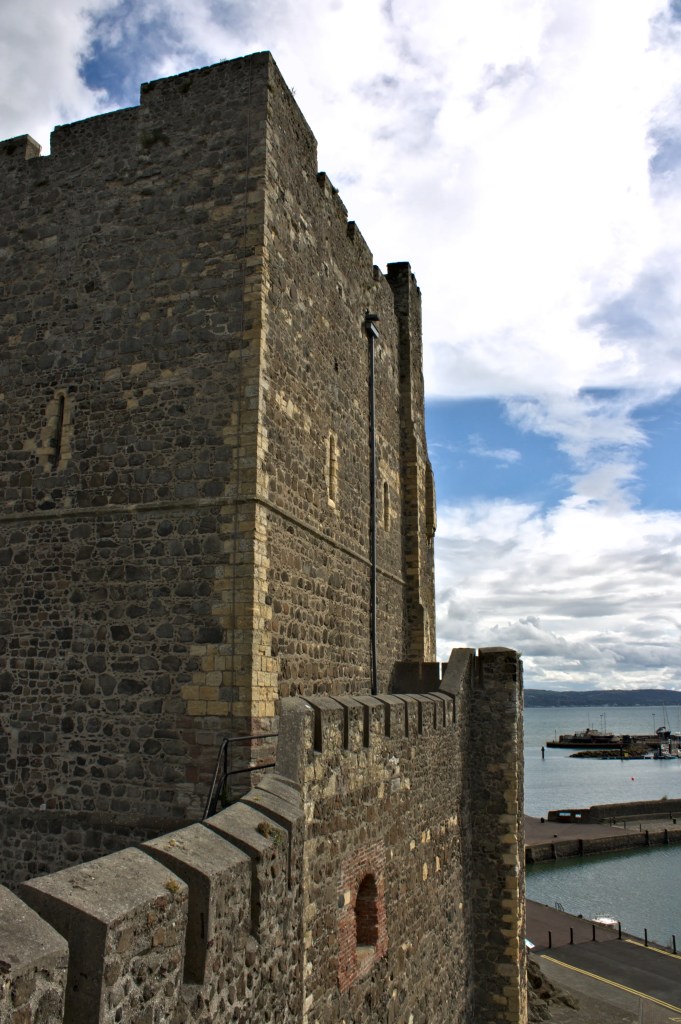
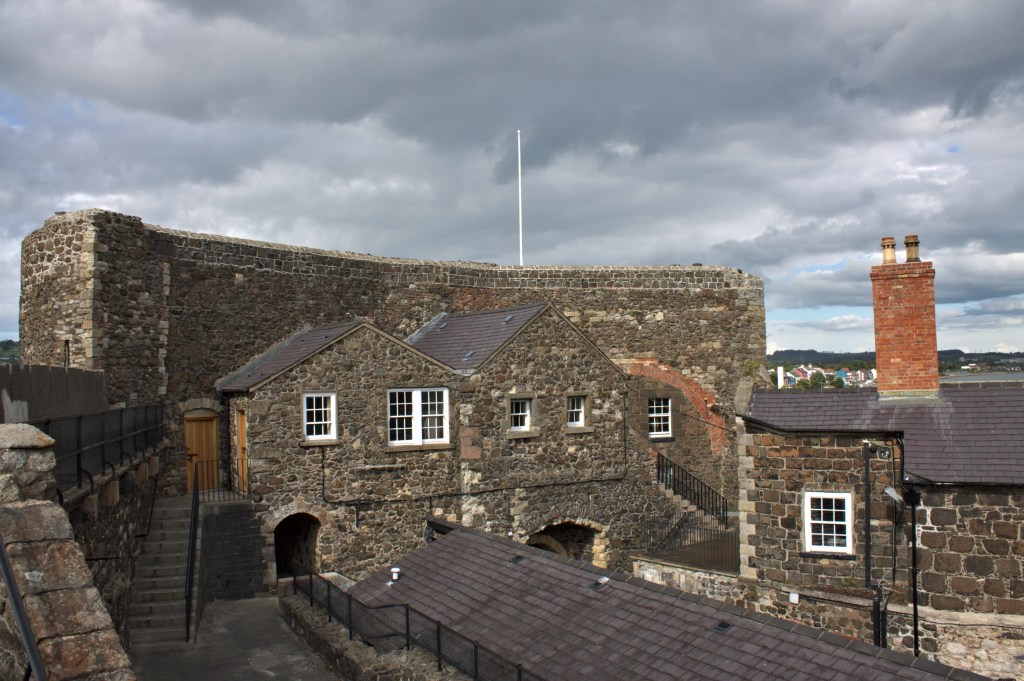
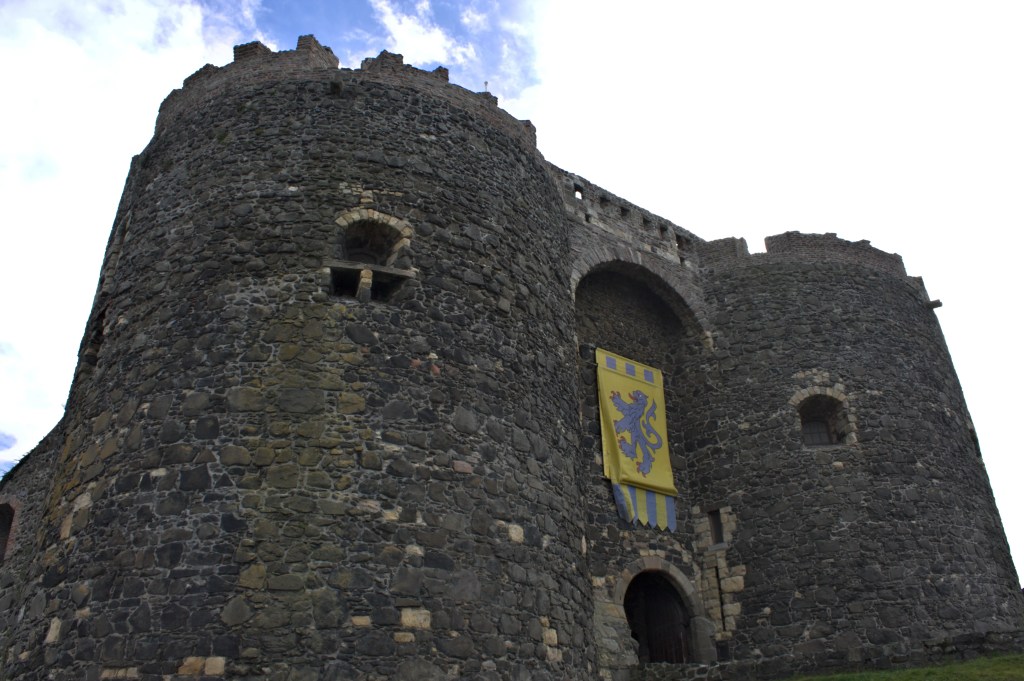

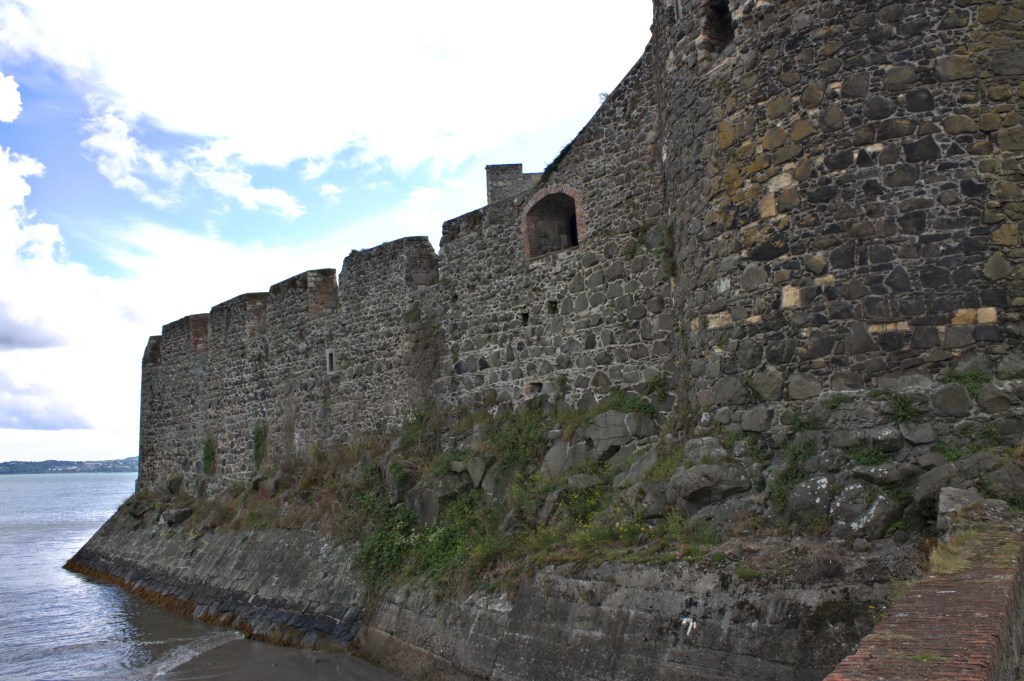
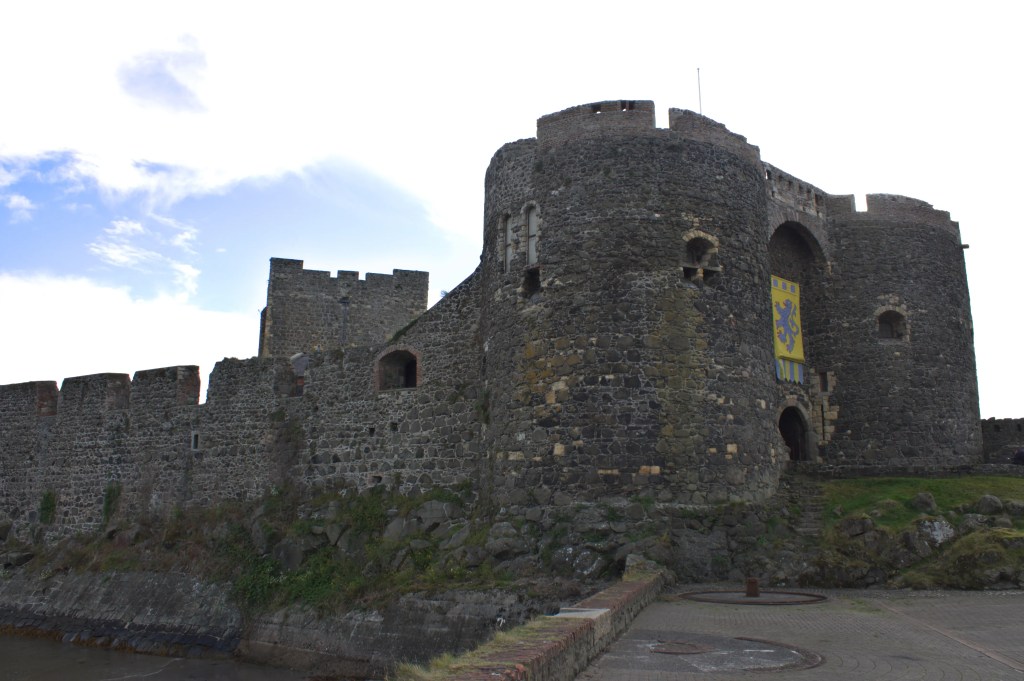
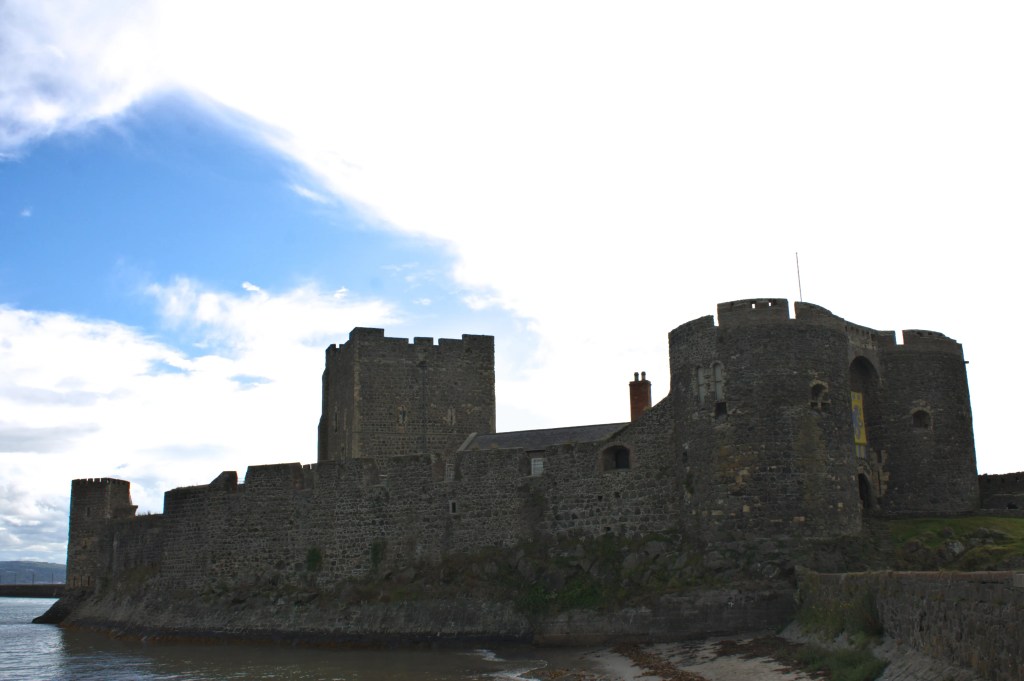
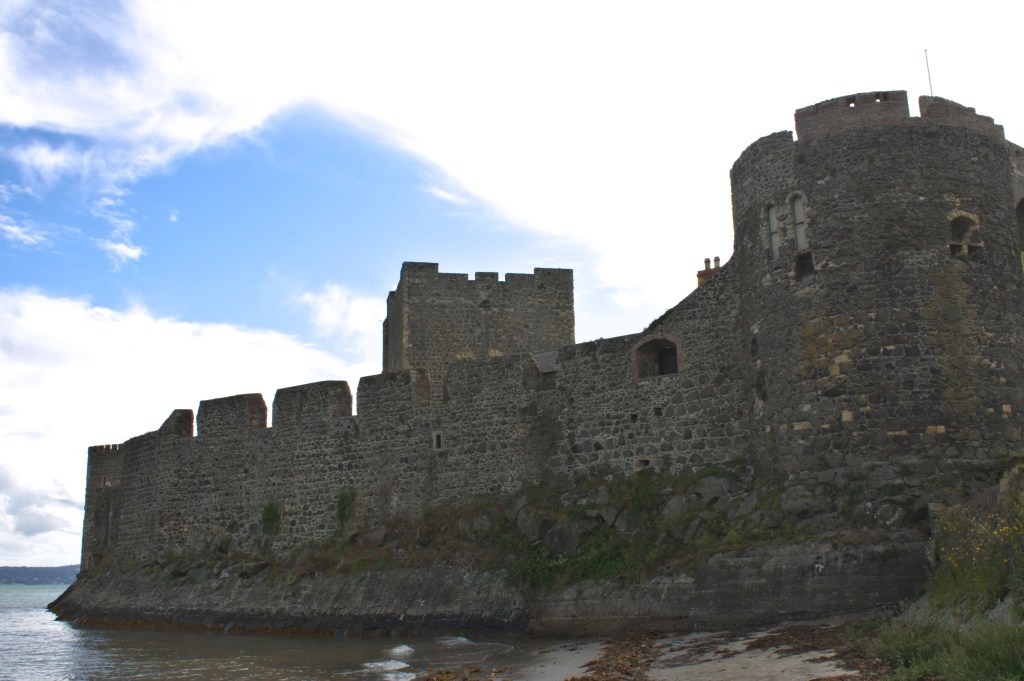


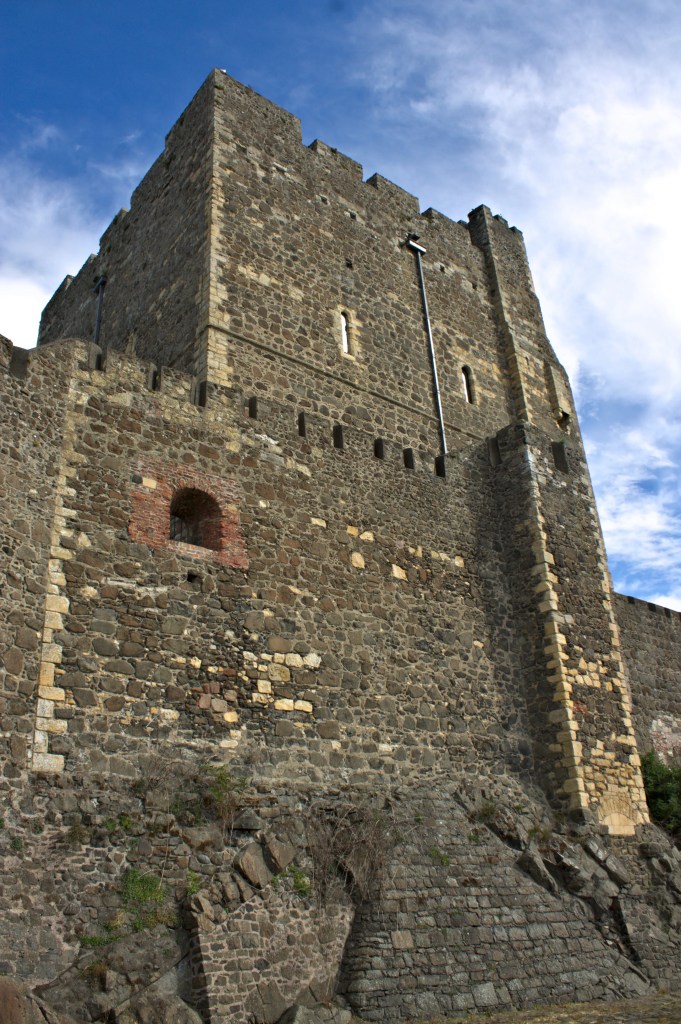
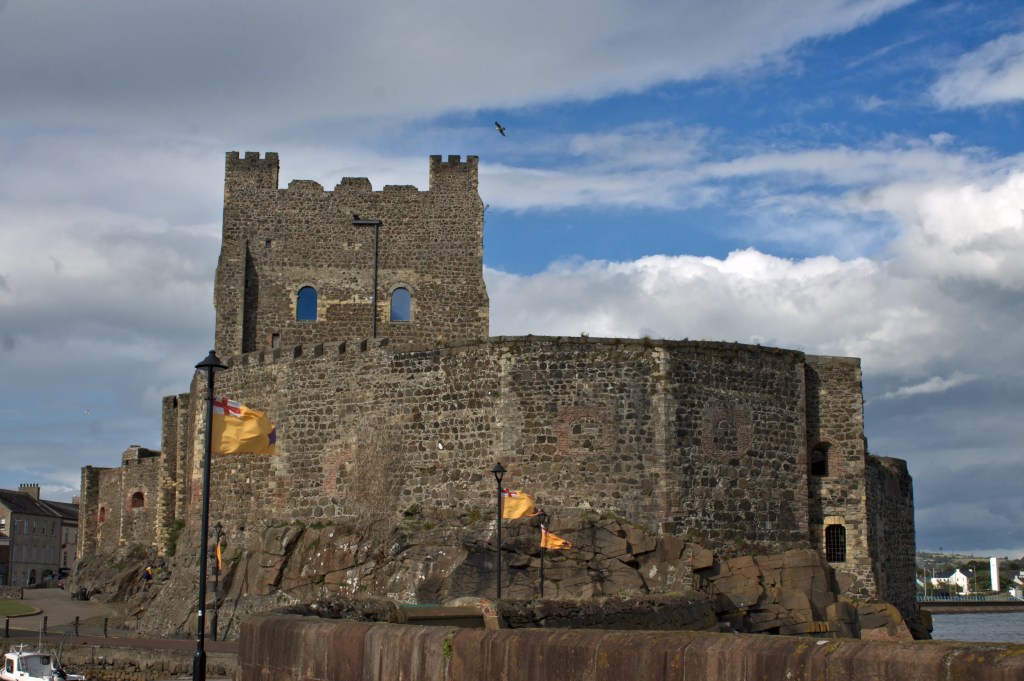
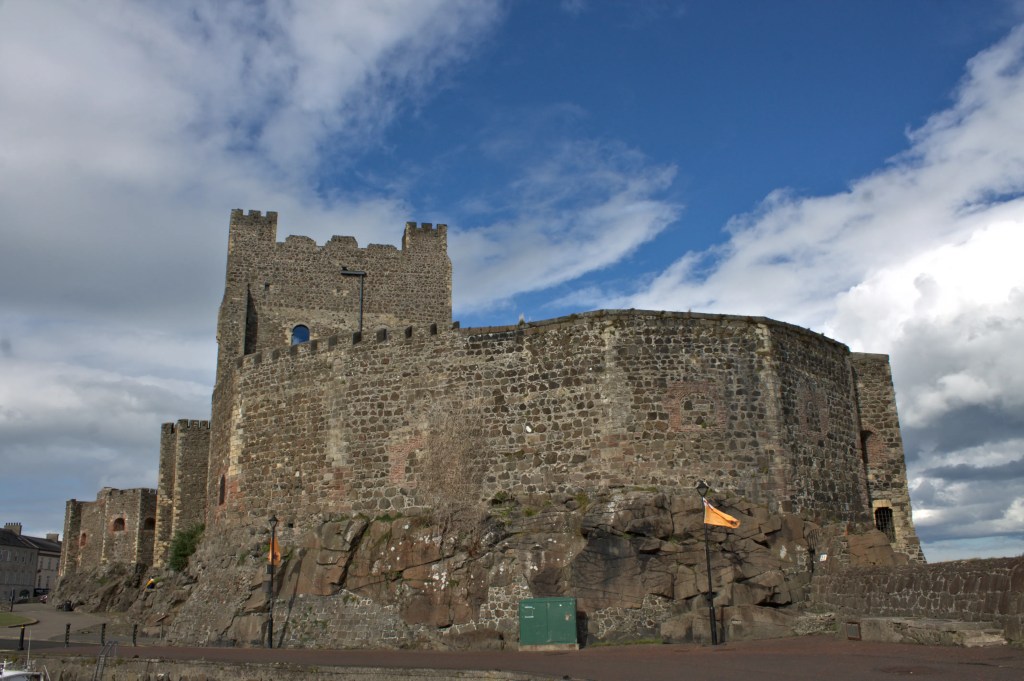
The 12th century Carrickfergus Castle is undoubtedly one of the most recognisable and breath-taking castles on the island of Ireland. Situated on the north shore of Belfast Lough (aka Carrickfergus Bay) the castle was built in 1177 shortly after the Anglo-Norman conquest of Ireland. It was built by John de Courcy and Anglo-Norman knight who arrived in Ireland in 1171 as part of a mercenary group working for Diarmaid Mac Murchadha, the ousted King of Leinster and a man infamous in Irish History. In early January 1177 de Courcy decided to invade the north of Ireland, an area which was still under the control of Irish families. De Courcy first took Downpatrick and by June 1177 had taken eastern Ulster after defeating the last King of Ulaid Ruaidhrí Mac Duinnshléibhe, it must be noted that he did this all without the permission of King Henry II. After he established Carrickfergus he built further monasteries and castles at Inch Abbey, Greyabbey and Dundrum Castle. When Richard I came to power in 1189 de Courcy again had in some way offended the king along with William de Lacy. However, William de Lacy made his peace with Richard I and his half brother Hugh de Lacy was commanded to do everything in his power to capture de Courcy. De Courcy was captured but somehow made his way to the Isle of Mann, understandably as he was married to Affrica the daughter of Godred II Olafsson, King of Mann. In May 1205 King John made Hugh de Lacy Earl of Ulster however only two months late in July 1205 John de Courcy returned with a hundred boats of Norse soldiers supplied by his brother in law Ragnold, King of Mann. John laid siege to Dundrum Castle but ultimately defeated ironically due to the strong defences he himself had built! De Courcy was imprisoned and subsequently went on a pilgrimage to the Holy Land, after his return he fell into relative obscurity and died impoverished near present day Craigavon.
Hugh de Lacy held the castle until 1210 until he refused to surrender it to royal control. King John crossed into Ireland with a large army, taking the castle and in turn decided it should be held by a series of crown appointed constables so as to not run into the same issue of rebellious Anglo-Norman Lords. King John invested heavily in the castle and its strategic importance was undeniable. After the collapse of the Earldom of Ulster in 1333 the castle remained the Crown’s principal administrative centre in the north of Ireland.
The castle was of utmost importance during the early parts of the Nine Years War (1595-1603) when English control of the north became strained and the castle was the only safe route to bring crown forces into the north. During the Ulster Plantation 1608-1615 under the direction of Governor Chichester the castle was heavily modified for artillery use and later became a vital refuge for protestant settlers during the 1641 Rebellion. During the Williamite War of 1689 the castle was held by a garrison loyal to Catholic King James II and was besieged by Williamite forces under Marshal Schomberg. The Jacobites within the castle held strong for a week but the endless heavy mortar bombardment led to their eventual surrender. On 14 June 1690 King William III, more well known as William of Orange, landed at Carrickfergus and used it as his base before marching south to the Battle of the Boyne.
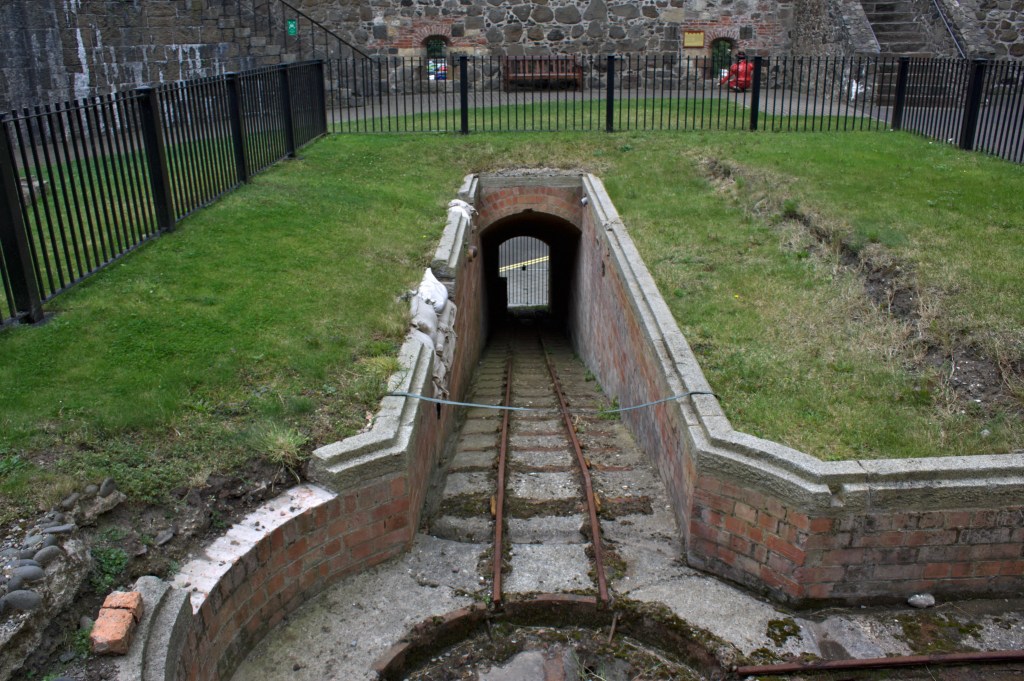
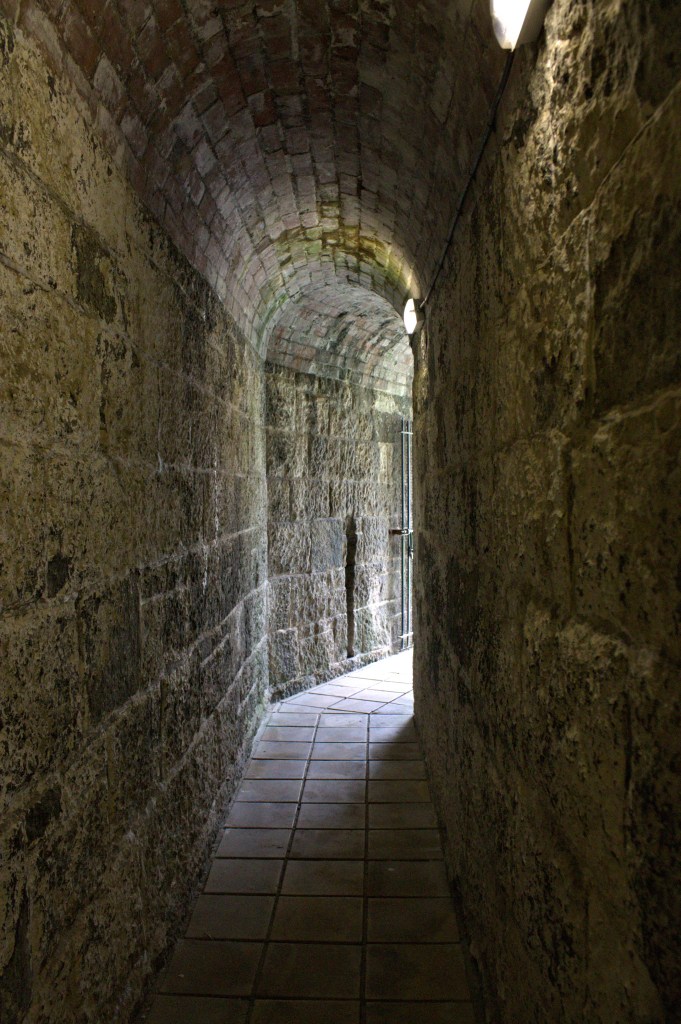
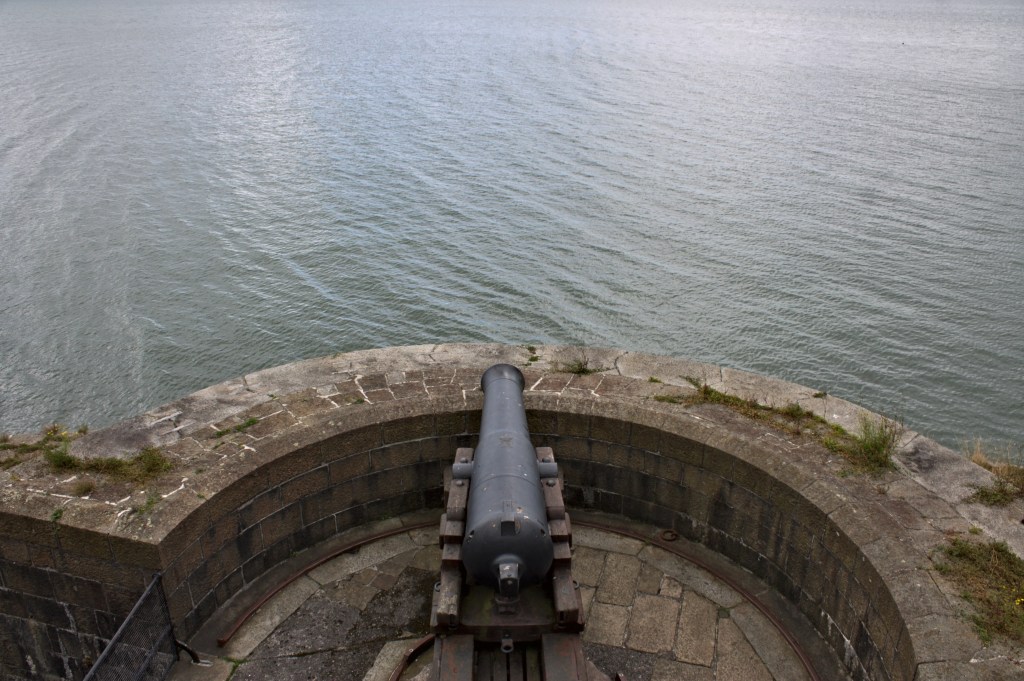
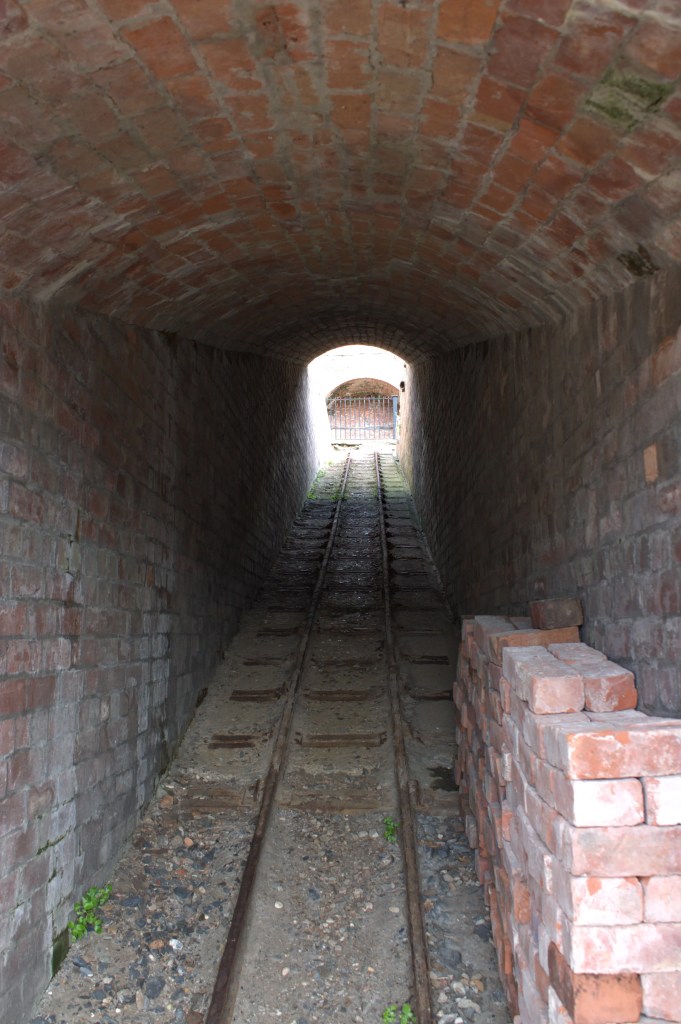
The castles eventful history continued through into the 18th century when in 1760 at the height of the Seven Years War a dramatic raid took place by a French Naval Force who, under Francois Thurot, landed at nearby Kilroot and stormed the castle, successfully breaching its defences and looting the down before a quick retreat to sea where they were subsequently defeated by the English Navy. In the 1790s the castle’s use changed to that of a military prison and was used to hold captured United Irishmen in the run up to and during the 1798 rebellion, it continued to be used as a prison during the Napoleonic Wars. In 1855 the Antrim Artillery occupied the castle and equipped it with high powered artillery in an effort to defend Belfast Lough. In 1899 engineers cut a light railway and tunnel directly through the castle’s bedrock to help manage an underwater mine network that would have been laid in the event of an enemy attack.
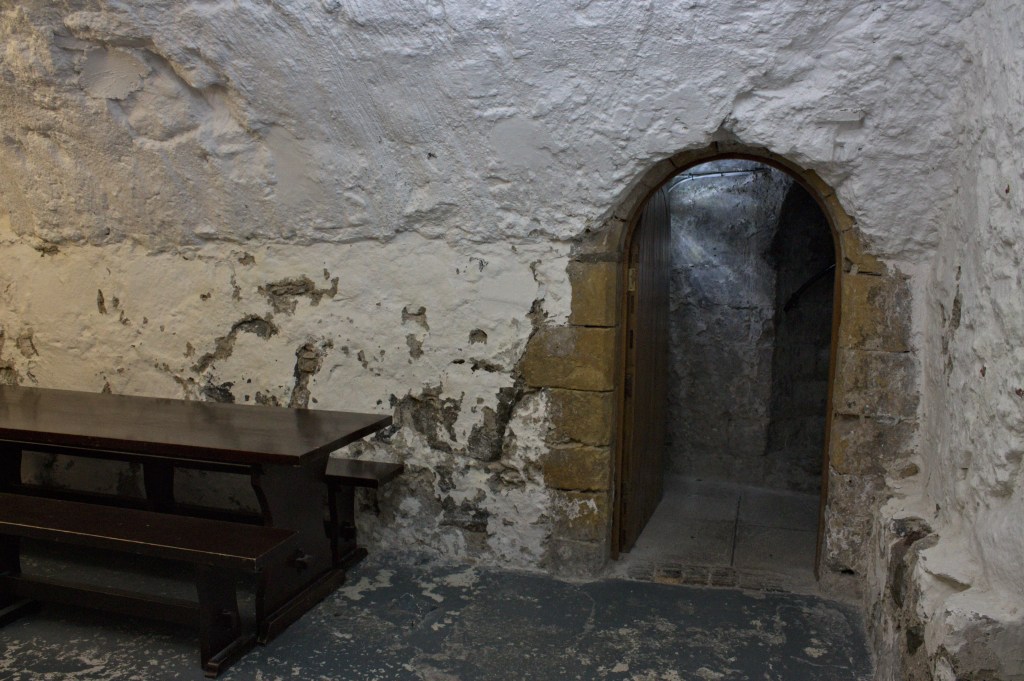
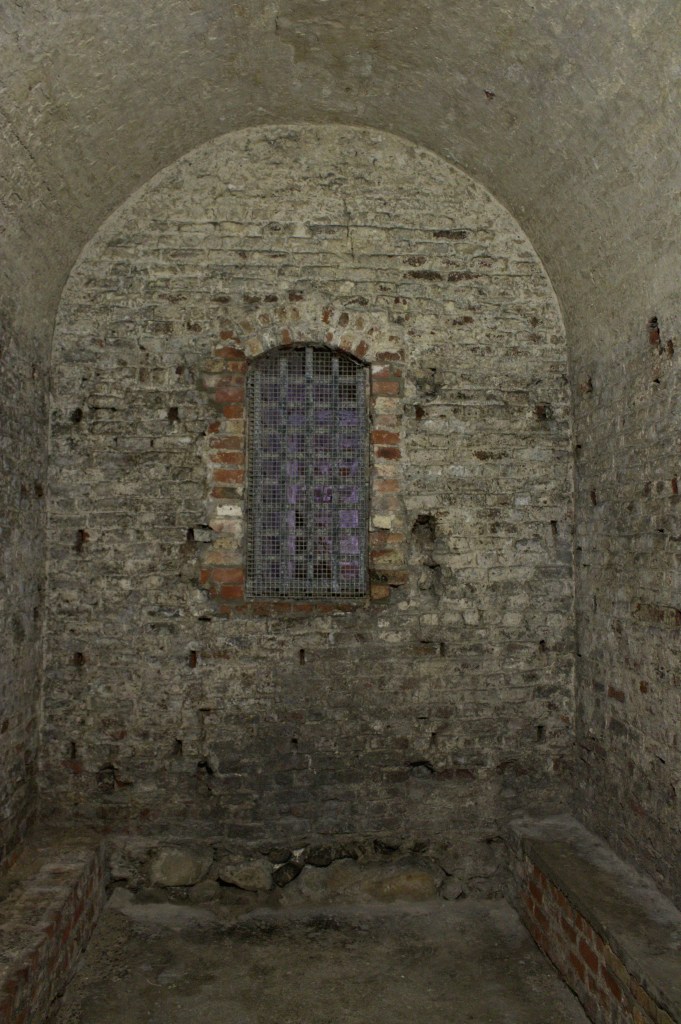
Into the 20th century the site served its final role as an active British Army garrison during World War 1. In 1928 it was officially handed over to the newly formed Northern Irish government to preserve it as an ancient historic monument. It briefly was used in a defensive capacity during World War 2 when its medieval vaults served as a community air raid shelter!
Carrickfergus Castle has an incredibly illustrious and significant history and one can only imagine the things those walls have seen. It is still such an impressive and striking structure and I wholly recommend a visit.
GPS: 54.71361, -5.80642